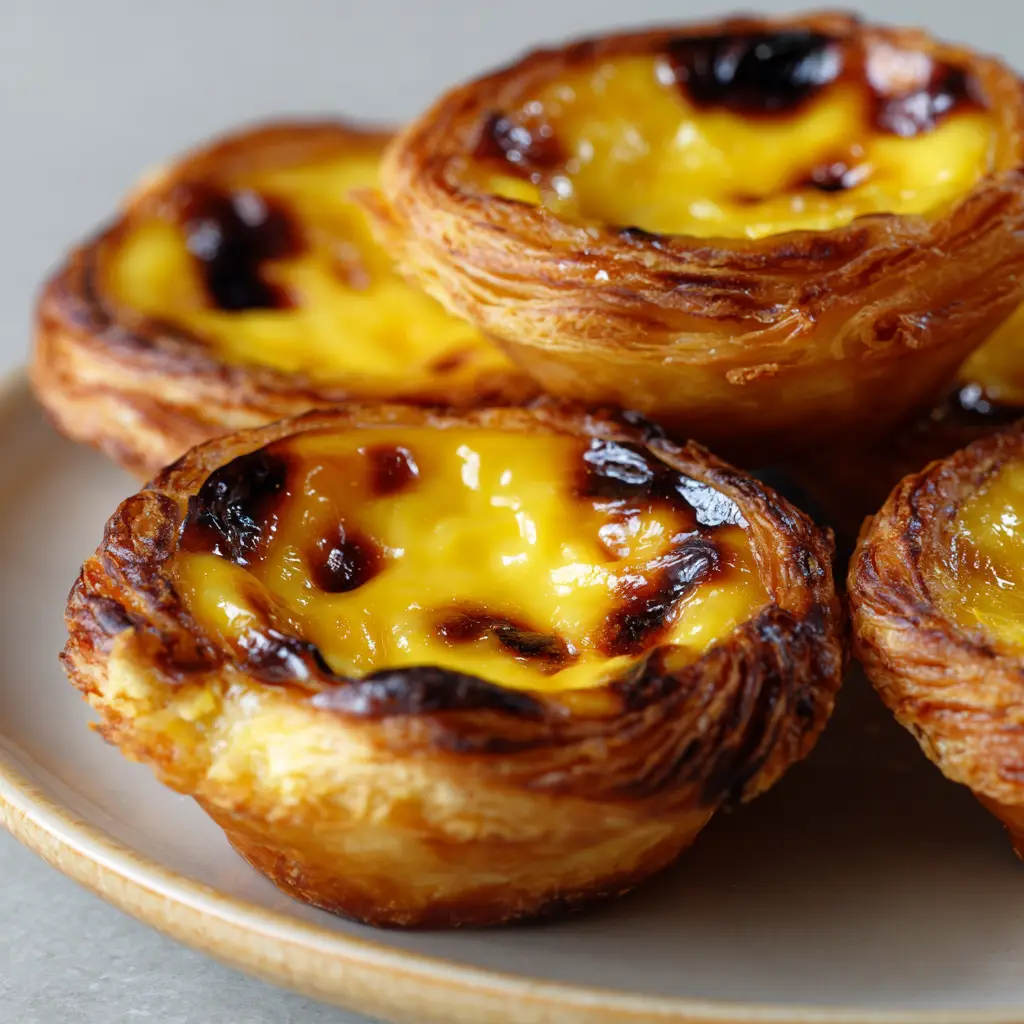
There is nothing quite like the sensory experience of biting into authentic Portuguese Custard Tarts. Also known as Pastéis de Nata, these bite-sized pastries are a masterpiece of culinary engineering. The contrast between the rich, glossy yellow egg custard and the shatteringly flaky crust is truly unforgettable.
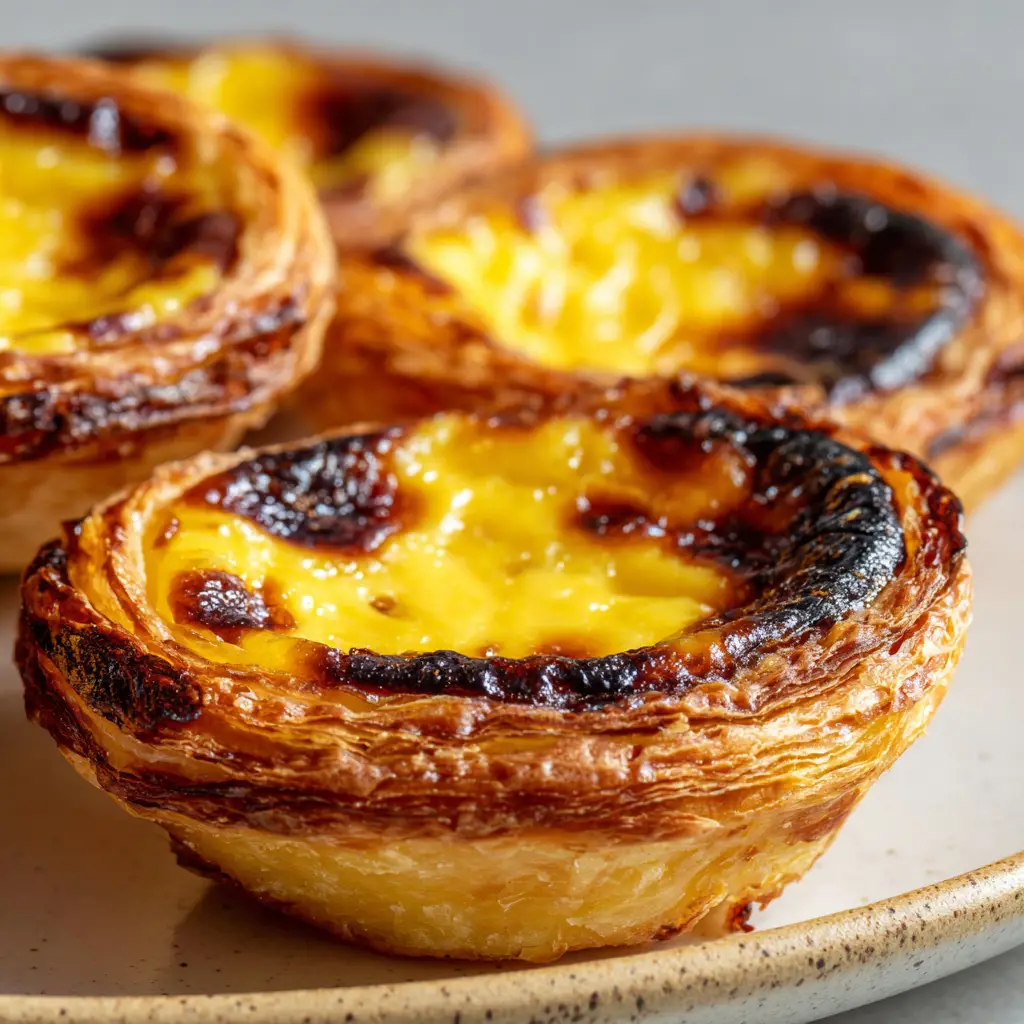
When you look closely at these freshly baked tarts, you will immediately notice the characteristic dark brown and black caramelized, blistered spots on the surface. These spots are not burnt; they are the result of a high-heat Maillard reaction that adds a complex, slightly bitter caramel note to the sweet filling. It is the hallmark of a traditional Portuguese bakery.
Achieving that distinct, visible spiral layer on the outer edge of the pastry might seem intimidating, but it relies on a simple rolling technique. By taking store-bought or homemade puff pastry, rolling it into a tight log, and pressing it into molds, you create vertical lamination. Once baked, the center becomes slightly sunken as it cools, resting beautifully within its crispy, golden-brown shell.
Why You’ll Love This Recipe
- Shatteringly Flaky Puff Pastry Crust: The unique method of rolling and pressing the dough creates beautiful, distinct spiral layers on the outer edge that shatter audibly when you take a bite.
- Rich Yellow Egg Custard Filling: Using a high ratio of egg yolks guarantees a glossy, vibrant yellow center that feels incredibly luxurious and melts in your mouth.
- Caramelized Blistered Spots: Baking these at a very high temperature ensures you get those characteristic dark brown and black blistered spots on the surface, offering an authentic, slightly smoky caramel flavor.
- Perfect Textural Contrast: The slightly sunken, silky center pairs immaculately with the sturdy, crisp pastry base, ensuring every bite is perfectly balanced.
- Simple Ingredients, Expert Results: You do not need to travel to Lisbon to enjoy these; the foundational ingredients are easily found in any local grocery store.
Ingredients & Substitutions
To achieve the exact visual and textural perfection of these Portuguese Custard Tarts, you need to understand the science behind each ingredient. Every component plays a crucial role in building the final structure.
Puff Pastry (1 sheet, 8.8 oz / 250g): This is the foundation of your shatteringly flaky puff pastry crust. Rolling it into a log and cutting it into discs creates the distinct, visible spiral layers on the outer edge. If you prefer, you can make a traditional rough puff pastry from scratch.
Large Egg Yolks (4 yolks): The fats and emulsifiers in the yolks are entirely responsible for the rich yellow egg custard filling. They provide a glossy sheen and a silky mouthfeel without making the custard taste overly eggy.
Whole Milk (1 cup / 240ml): Whole milk acts as the primary liquid base for the custard, providing essential milk sugars and proteins. Do not substitute with skim milk, or you will lose the glossy, rich texture.
Granulated Sugar (3/4 cup / 150g): Sugar does more than sweeten the tart; it is heated into a syrup that stabilizes the eggs. During baking, this high sugar content is what creates the dark brown caramelized blistered custard spots.
Water (1/3 cup / 80ml): Used exclusively to dissolve the sugar and create the hot syrup. It evaporates during the cooking process, leaving behind a concentrated, structured sweetness.
All-Purpose Flour (3 tbsp / 25g): Flour acts as the thickening agent for the custard base. It absorbs the milk and stabilizes the egg yolks, preventing them from scrambling in the intense oven heat.
Cinnamon Stick (1 whole): A traditional aromatic that steeps in the sugar syrup. It imparts a subtle, warm, woody spice that cuts through the richness of the egg yolks.
Lemon Peel (2 large strips): The essential oils in the lemon peel infuse the syrup with a bright, citrusy aroma. Be sure to avoid the white pith, which can introduce unwanted bitterness.
Vanilla Extract (1 tsp / 5ml): While not strictly traditional in ancient recipes, a splash of vanilla bridges the flavors of the dairy and the caramelized sugar. It adds a beautiful aromatic depth.
Pinch of Kosher Salt (1/8 tsp / 0.5g): A foundational, invisible ingredient that enhances all the other flavors. Salt balances the sweetness and highlights the richness of the yolks.
Equipment Needed
- Standard Muffin Tin or Tart Molds: While traditional Portuguese bakeries use specific metal tins, a heavy-duty, standard 12-cup muffin tin works perfectly to conduct the high heat needed for the crust.
- Medium Saucepan: Essential for boiling the sugar syrup and thickening the milk base without scorching.
- Candy Thermometer (Optional but recommended): Helps ensure your sugar syrup reaches exactly 212°F (100°C) for the perfect custard consistency.
- Fine Mesh Strainer: Crucial for removing the lemon peel, cinnamon stick, and any accidental egg clumps, resulting in a glossy, smooth filling.
Step-by-Step Instructions
Step 1: Prepare the Puff Pastry Spirals
Lightly dust your work surface with flour and lay out the thawed puff pastry sheet. Gently brush the entire surface with a very light layer of water using a pastry brush. Tightly roll the pastry away from you into a firm, cohesive log.
Wrap the log tightly in plastic wrap and chill it in the refrigerator for at least 20 minutes. This rests the gluten and hardens the butter, ensuring your crust will be shatteringly flaky.
Step 2: Shape the Tart Crusts
Remove the chilled pastry log and trim the uneven ends. Slice the log crosswise into 12 equal discs, each about 1/2-inch (1.25cm) thick. You will immediately see the distinct, visible spiral layers in each disc.
Place one disc flat into the bottom of each well in your ungreased muffin tin. Dip your thumbs in cold water and press firmly into the center of the disc, pushing the dough outwards and up the sides of the tin. The dough should be slightly thinner on the bottom and thicker with a distinct rim around the top edge.
Step 3: Create the Aromatic Sugar Syrup
In a medium saucepan, combine the granulated sugar, water, cinnamon stick, and lemon peel. Bring the mixture to a rolling boil over medium-high heat without stirring.
Let it boil vigorously until it reaches exactly 212°F (100°C) on a thermometer, or about 3 to 4 minutes. The syrup will smell deeply fragrant and look slightly thicker. Remove from heat and set aside.
Step 4: Thicken the Custard Base
In a separate bowl, whisk together the all-purpose flour and about 1/4 cup (60ml) of the cold whole milk until a perfectly smooth paste forms. Pour the remaining milk into a saucepan and heat over medium until it just begins to steam.
Slowly whisk the warm milk into the flour paste to temper it, then return the entire mixture to the saucepan. Cook over medium-low heat, whisking constantly for 4-5 minutes, until the mixture thickens into a glossy, smooth paste.
Step 5: Incorporate the Syrup and Yolks
Remove the thickened milk paste from the heat. In a slow, steady stream, whisk the hot aromatic sugar syrup into the milk mixture. Discard the cinnamon stick and lemon peel.
Allow this mixture to cool for about 10 minutes; it must be warm but not scalding to prevent the eggs from cooking prematurely. Once cooled slightly, vigorously whisk in the 4 large egg yolks and the vanilla extract. Pour the entire mixture through a fine-mesh strainer into a large measuring cup to ensure a perfectly smooth, rich yellow egg custard filling.
Step 6: Fill and Bake
Preheat your oven to its absolute maximum setting, ideally 500°F (260°C) or 550°F (285°C). The high heat is mandatory to achieve the blistering.
Carefully pour the strained custard into the pastry-lined muffin tins, filling them about 3/4 of the way to the top. Do not overfill, or the custard will boil over and prevent the crust from crisping.
Step 7: Blister and Cool
Bake on the top rack of your preheated oven for 12 to 15 minutes. Watch them closely. You are looking for the pastry edges to become deeply golden and for the custard to puff up significantly.
The tops should develop characteristic dark brown and black caramelized, blistered spots. Once these spots form, immediately remove the pan from the oven. As the tarts cool in the pan for 10 minutes, the inflated centers will deflate, becoming slightly sunken and beautifully glossy. Transfer to a wire rack to cool completely.
Expert Tips for Success
- Do Not Fear the Burn: The dark brown and black spots on the surface are a required flavor profile, offering a hint of caramel bitterness that balances the sweet, glossy yellow filling. Let them blister!
- Keep the Dough Cold: If your kitchen is warm, chill the muffin tin after pressing the dough into it. Cold dough hitting a blazing hot oven equals a shatteringly flaky puff pastry crust.
- Strain the Custard: Never skip pushing the final custard mixture through a fine-mesh sieve. This guarantees the signature silky, glossy texture by catching any accidental cooked egg proteins or flour lumps.
- Oven Positioning: Bake the tarts in the upper third of your oven. This positions them closer to the primary heat source, encouraging the tops to blister before the pastry bases overbake.
- Wet Your Thumbs: When pressing the pastry discs into the muffin tin, keeping your thumbs moist prevents sticking and helps you push the dough up the sides evenly.
Storage & Reheating/Freezing
Portuguese Custard Tarts are best enjoyed on the exact day they are made, ideally still slightly warm from the oven. However, if you have leftovers, they can be stored in an airtight container in the refrigerator for up to 3 days.
Because the refrigerator will cause the puff pastry crust to lose its crispness, you must reheat them properly. Place the chilled tarts in a 350°F (175°C) oven for 5-8 minutes until the crust is revived and the rich yellow egg custard is warmed through. Do not microwave them, or the pastry will become rubbery.
You can freeze baked tarts for up to 2 months. Thaw them overnight in the refrigerator and reheat them in the oven as directed above to bring back that shatteringly flaky texture.
What to Serve With This
These Portuguese Custard Tarts make a phenomenal dessert following a robust, comforting dinner. If you are planning a globally inspired weekend feast, start your meal with a warming bowl of zuppa-toscana-soup or a hearty classic-beef-stew. The deep, savory notes of the stew pair wonderfully with the sweet, creamy finish of the tarts.
If you prefer a lighter, more vibrant main course, consider serving a chicken-and-sweet-potato-bowl or an elegant shrimp-and-asparagus-stir-fry. You could also lean into rich, spiced flavors with jamaican-brown-stew-chicken, followed by these tarts to cool the palate.
For a beautiful dessert spread or afternoon tea, pair these tarts with a steaming mug of french-hot-chocolate. The bitterness of the dark chocolate beautifully compliments the caramelized custard. You might also want to serve them alongside vanilla-custard-cream-squares or creme-brulee-cookies for a fully themed custard-lovers dessert board!
If you’re hosting a brunch, these tarts go incredibly well with savory morning dishes like spicy-gochujang-eggs or a warm slice of sourdough-discard-cinnamon-bread. For a touch of freshness, add a side of apple-salad-recipe.
Frequently Asked Questions
Yes! High-quality, all-butter store-bought puff pastry is an excellent shortcut. Rolling the sheet into a tight log and cutting it into discs is what creates the distinct, visible spiral layers on the outer edge.
While traditional bakeries in Lisbon use specific, small flared metal molds, a standard 12-cup heavy-duty muffin tin works perfectly to conduct the heat and support the shatteringly flaky crust.
The caramelized blistered spots are achieved by baking the tarts at a very high temperature, typically 500°F (260°C) or higher. This intense heat scorches the high-sugar custard surface before the pastry overcooks.
It is completely normal and expected for authentic Portuguese Custard Tarts to be slightly sunken in the center. The custard puffs up rapidly in the extreme heat of the oven and naturally deflates as it cools, giving it that classic Pastéis de Nata appearance.
Straining the custard through a fine-mesh sieve is crucial to achieve a rich, glossy yellow egg custard filling. It catches the cinnamon stick, lemon peel, and any tiny bits of cooked egg or flour lumps, guaranteeing a silky smooth texture.
Recipe Card
Authentic Portuguese Custard Tarts (Pastéis de Nata)
Ingredients
Equipment
Method
- Lightly dust your work surface with flour and lay out the thawed puff pastry sheet. Gently brush the entire surface with a very light layer of water using a pastry brush. Tightly roll the pastry away from you into a firm, cohesive log. Wrap the log tightly in plastic wrap and chill it in the refrigerator for at least 20 minutes.
- Remove the chilled pastry log and trim the uneven ends. Slice the log crosswise into 12 equal discs, each about 1/2-inch (1.25cm) thick. Place one disc flat into the bottom of each well in your ungreased muffin tin. Dip your thumbs in cold water and press firmly into the center of the disc, pushing the dough outwards and up the sides of the tin.
- In a medium saucepan, combine the granulated sugar, water, cinnamon stick, and lemon peel. Bring the mixture to a rolling boil over medium-high heat without stirring. Let it boil vigorously until it reaches exactly 212°F (100°C) on a thermometer, or about 3 to 4 minutes. Remove from heat and set aside.
- In a separate bowl, whisk together the all-purpose flour and about 1/4 cup (60ml) of the cold whole milk until a perfectly smooth paste forms. Pour the remaining milk into a saucepan and heat over medium until it just begins to steam. Slowly whisk the warm milk into the flour paste to temper it, then return the entire mixture to the saucepan. Cook over medium-low heat, whisking constantly for 4-5 minutes, until thickened.
- Remove the thickened milk paste from the heat. In a slow, steady stream, whisk the hot aromatic sugar syrup into the milk mixture. Discard the cinnamon stick and lemon peel. Allow this mixture to cool for about 10 minutes. Once cooled slightly, vigorously whisk in the 4 large egg yolks and the vanilla extract. Pour the entire mixture through a fine-mesh strainer.
- Preheat your oven to its absolute maximum setting, ideally 500°F (260°C) or 550°F (285°C). Carefully pour the strained custard into the pastry-lined muffin tins, filling them about 3/4 of the way to the top.
- Bake on the top rack of your preheated oven for 12 to 15 minutes. The tops should develop characteristic dark brown and black caramelized, blistered spots. Once these spots form, immediately remove the pan from the oven. As the tarts cool in the pan for 10 minutes, the inflated centers will deflate, becoming slightly sunken. Transfer to a wire rack to cool completely.
Notes
High Heat is Crucial: Do not be afraid of the high oven temperature; it is strictly required to get the authentic dark brown caramelized blistered custard spots without overcooking the filling.
Closing Thoughts
Mastering these Portuguese Custard Tarts is a deeply rewarding culinary project. Watching the rich, glossy yellow egg custard bubble and blister under the intense heat of the oven is a beautiful sight. When you finally bite into that shatteringly flaky puff pastry crust, all the effort will be worth it.
Have you tried making these at home? Let me know in the comments below how your tarts turned out! Be sure to subscribe to our newsletter for more incredible baking projects and follow us on Pinterest to save this recipe for your next weekend baking adventure.