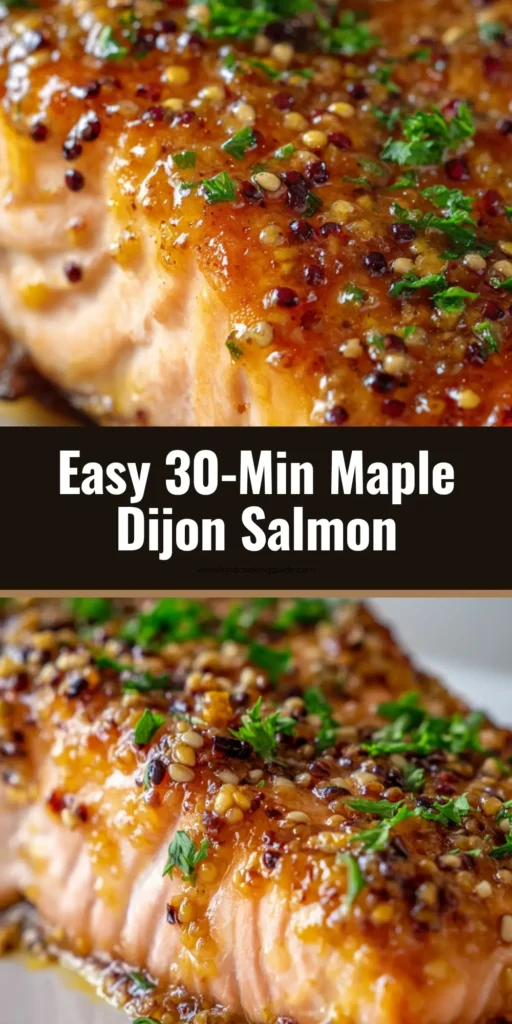
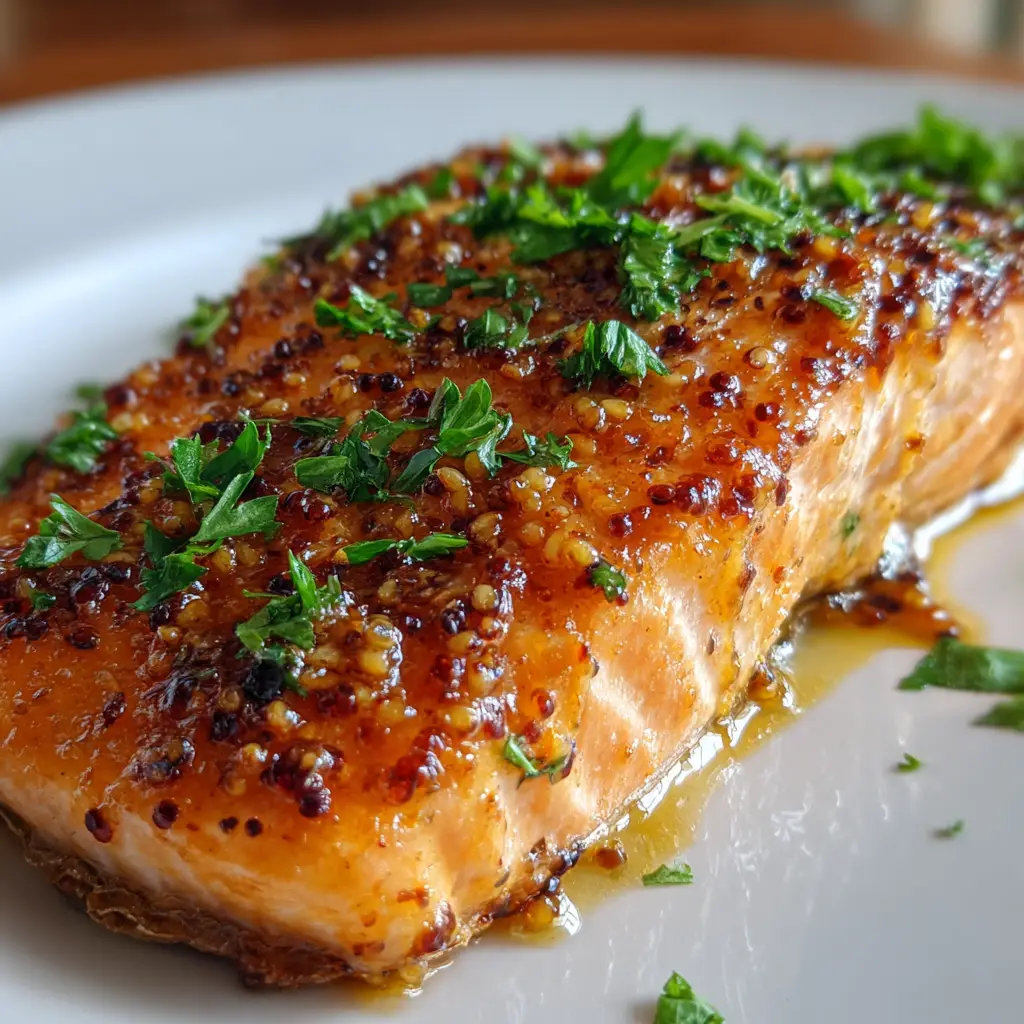
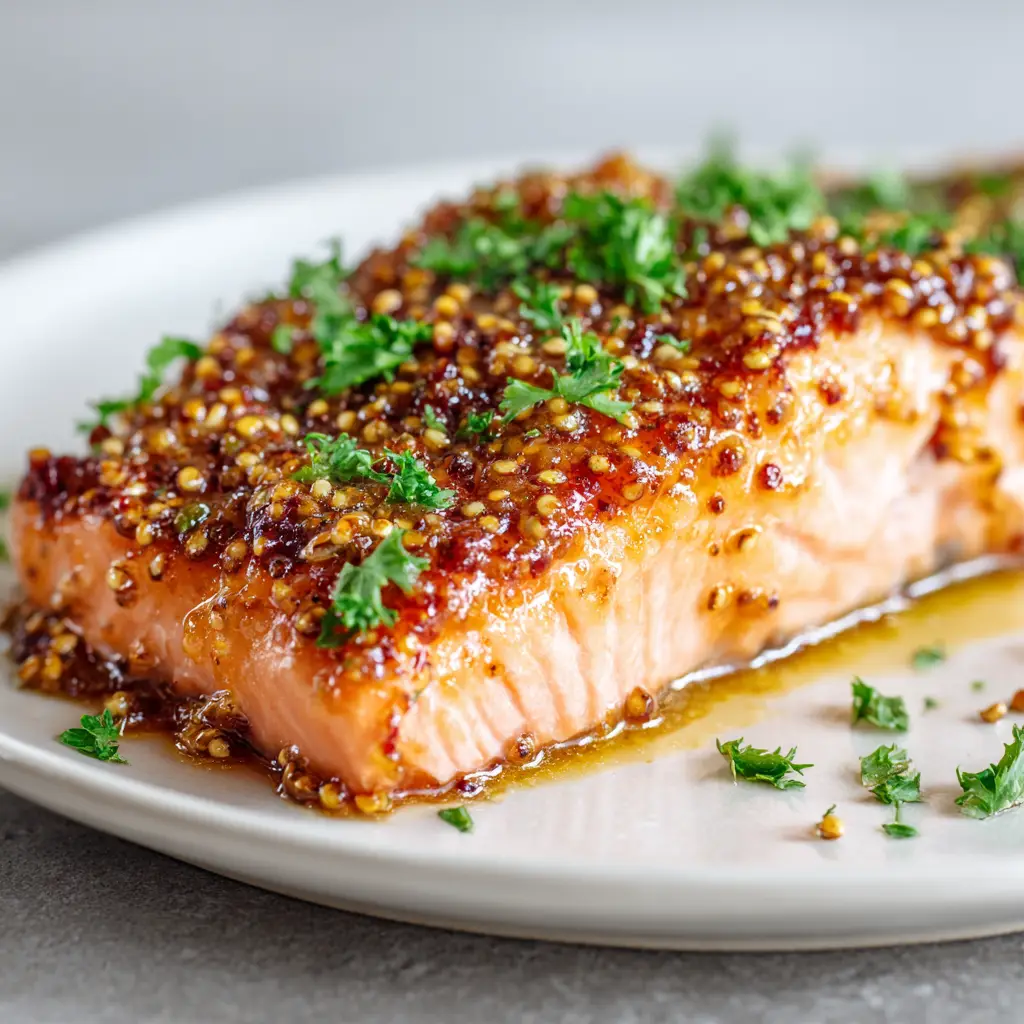
This is the maple dijon salmon recipe that will ruin all others for you. Imagine a perfectly baked, flaky pink salmon fillet, shimmering under a thick, sticky amber glaze that’s both sweet and tangy. You can see the tiny pops of whole grain mustard seeds, promising a delightful texture with every bite.
The real magic, however, lies in the edges. Those slightly charred, deeply caramelized bits offer an incredible contrast to the tender, moist salmon. Finished with a sprinkle of bright, fresh parsley, this dish looks like it came from a high-end restaurant but is shockingly simple to make in your own kitchen.
Why This Maple Dijon Salmon Recipe Is a Game-Changer
You’re not just making dinner; you’re creating a sensory experience. Here’s why this recipe stands out:
- The Perfect Sticky Glaze: We’re not talking about a thin, watery sauce. This glaze is engineered to be thick, glossy, and sticky, clinging to every crevice of the salmon fillet for maximum flavor.
- Unforgettable Caramelized Edges: The secret to those beautiful, slightly charred edges isn’t complicated. A quick, watchful moment under the broiler transforms the glaze, creating a restaurant-worthy finish that’s visually stunning and delicious.
- Flaky & Moist Every Time: By following our precise temperature and timing, you’ll achieve a salmon fillet that is perfectly cooked through—moist, tender, and flaking beautifully with the touch of a fork.
- Effortless Weeknight Elegance: This entire masterpiece comes together in under 30 minutes, making it the perfect solution for a busy weeknight when you crave something special without the fuss.
The Amber Glaze & Flaky Salmon: Your Ingredient Checklist
The beauty of this recipe is its reliance on a few high-quality pantry staples to create something truly spectacular.
For the Salmon
- Salmon Fillets: The star of the show. Using four 6-ounce (170g) skin-on or skinless fillets provides the perfect canvas. A thicker cut, like Atlantic or King salmon, works best to ensure a moist interior.
- Olive Oil: A light coating of 1 tbsp (15ml) of extra virgin olive oil helps the salmon cook evenly and prevents it from sticking to the pan.
- Salt & Pepper: These are foundational. A simple seasoning of 1/2 tsp (3g) of kosher salt and 1/4 tsp (1.5g) of freshly cracked black pepper enhances all the other flavors.
For the Maple Dijon Glaze
- Pure Maple Syrup: This is non-negotiable for that authentic, amber sweetness. You’ll need 1/4 cup (60ml) of the real stuff—not pancake syrup—as its natural sugars are key to caramelization.
- Dijon Mustard: Two tablespoons (30g) of smooth Dijon mustard provides the tangy, sharp backbone and helps to emulsify the glaze into a creamy consistency.
- Whole Grain Mustard: One tablespoon (15g) of whole grain mustard adds that crucial visual and textural pop from the brown and yellow mustard seeds.
- Soy Sauce: Just 1 tsp (5ml) of low-sodium soy sauce (or tamari for a gluten-free option) deepens the color and adds a wonderful layer of savory umami that balances the sweetness.
- Garlic Powder: A 1/2 tsp (2g) of garlic powder infuses the glaze with a savory aroma and flavor that complements the other ingredients perfectly.
- Fresh Parsley: One tablespoon (4g) of finely chopped fresh parsley is for the garnish. Its bright green color and fresh, clean taste cut through the richness of the glaze.
Essential Tools for This Culinary Masterpiece
You don’t need a professional kitchen to achieve flawless results. Here is the simple equipment that will guarantee success.
- Baking Sheet: A standard half-sheet pan is the perfect size for four fillets.
- Parchment Paper or Aluminum Foil: This is essential for easy cleanup. The caramelized maple glaze is delicious but can be stubborn to clean.
- Small Mixing Bowl: For whisking together that incredible amber glaze.
- Whisk or Fork: To ensure all the glaze ingredients are perfectly combined and emulsified.
From Prep to Plate: The Path to Perfect Maple Dijon Salmon
Follow these steps closely, paying attention to the sensory cues, to recreate the exact dish you see in the photos. This is where simple ingredients become a show-stopping meal.
Step 1: Prepare the Oven and Salmon
First things first, position an oven rack in the upper-middle position and preheat your oven to 400°F (200°C). Line your baking sheet with parchment paper. Pat the salmon fillets completely dry with a paper towel—this is a critical step for a great texture. Arrange the fillets on the sheet, leaving some space between them. Brush lightly with olive oil and season generously with salt and pepper.
Step 2: Whisk Together the Magic Glaze
In your small mixing bowl, combine the maple syrup, Dijon mustard, whole grain mustard, soy sauce, and garlic powder. Whisk vigorously until the glaze is smooth and uniform. You should see a glossy, amber-colored sauce, thick enough to coat the back of a spoon.
Step 3: The First Bake
Spoon about half of the maple dijon glaze over the salmon fillets, spreading it evenly to cover the tops and sides. Place the baking sheet in the preheated oven and bake for 10-12 minutes. The exact time will depend on the thickness of your fillets.
Step 4: The Caramelization Stage (The Broiler)
This is the most important step for achieving those signature charred edges. Remove the salmon from the oven and turn your oven’s broiler on high. Brush the remaining glaze over the fillets. Return the pan to the oven and broil for 1-3 minutes. Watch it like a hawk! The sugars in the glaze can go from perfectly caramelized to burnt in seconds. You’re looking for bubbling glaze and deeply browned, almost charred, edges.
Step 5: Garnish and Serve
Carefully remove the salmon from the oven. Let it rest for a minute before sprinkling the finely chopped fresh parsley over the top. The vibrant green adds a burst of color and freshness. Serve immediately and prepare for compliments.
Secrets From My Kitchen: Tips for Unforgettable Salmon
- Don’t Overcook Your Salmon: The number one mistake people make is overcooking salmon. It should be slightly opaque in the center and flake easily. If you have an instant-read thermometer, aim for an internal temperature of 140-145°F (60-63°C) in the thickest part.
- Pat the Salmon Dry: I mentioned it in the instructions, but it’s worth repeating. Removing excess moisture from the surface of the fish is crucial for getting a good texture and helping the glaze adhere properly.
- Reserve Half the Glaze: Adding the second layer of glaze just before broiling creates an extra-thick, sticky, and glossy coating that is absolutely irresistible.
- Know Your Broiler: Every broiler is different. Some are intensely hot, others are more moderate. The first time you make this, stay glued to your oven door to understand how quickly it works its magic.
Savoring Later: How to Store & Reheat Your Salmon
While this Maple Dijon Salmon is best enjoyed fresh, leftovers are still a treat. Store any cooled leftovers in an airtight container in the refrigerator for up to 2 days.
To reheat, avoid the microwave as it can dry out the fish. Instead, gently warm the salmon in an oven at 275°F (135°C) for 10-15 minutes, or until warmed through. You can also flake the cold salmon over a salad for a delicious next-day lunch.
Creating the Perfect Plate: What to Serve with Your Salmon
This salmon’s sweet and savory profile pairs wonderfully with a variety of side dishes. For a satisfying and complete meal, consider serving it alongside some crispy oven-roasted fingerling potatoes.
To add a fresh, crunchy contrast, a vibrant salad is an excellent choice. This dish is fantastic with a simple green salad, or you could try something with more texture like this cowboy cabbage salad (coming soon). For a taste of the Mediterranean, an authentic Greek salad (coming soon) provides a bright, tangy counterpoint to the rich glaze.
Your Maple Dijon Salmon Questions, Answered
Yes! Preheat your air fryer to 400°F (200°C). Place the glazed salmon in the basket and cook for 7-9 minutes, or until cooked through. You may not need the broiling step as the air fryer circulates heat intensely.
The salmon is done when it flakes easily with a fork. For a precise measurement, use a meat thermometer; the internal temperature in the thickest part should read 145°F (63°C).
The key is to watch it very closely. The broiler works fast! Keep the salmon on a middle rack, not the top one, and only broil for 1-3 minutes. The goal is caramelization, not incineration.
Honey is the best substitute for a similar sticky glaze. Brown sugar will also work, but you may need to add a little water or oil to the glaze to get the right consistency.
We recommend a thicker fillet, like Atlantic, King, or Coho salmon, about 1-1.5 inches (2.5-4 cm) thick. This ensures the inside stays moist and flaky while the outside caramelizes.
Print-Ready Perfection: The Complete Maple Dijon Salmon Recipe
Maple Dijon Salmon: The Ultimate Recipe for a Sticky, Caramelized Glaze
Ingredients
Equipment
Method
- Position an oven rack in the upper-middle position and preheat oven to 400°F (200°C). Line a baking sheet with parchment paper. Pat salmon fillets dry, place on the sheet, brush with olive oil, and season with salt and pepper.
- In a small bowl, whisk together the maple syrup, Dijon mustard, whole grain mustard, soy sauce, and garlic powder until smooth.
- Spoon about half of the glaze evenly over the salmon fillets. Bake for 10-12 minutes, depending on the thickness of the fish.
- Remove salmon from the oven and turn the broiler on high. Brush with the remaining glaze. Broil for 1-3 minutes, watching constantly, until the glaze is bubbling and the edges are caramelized and slightly charred.
- Remove from oven, let rest for a minute, then sprinkle with fresh parsley before serving.
Notes
Pat the Salmon Dry: This step is crucial for getting the best texture and helps the glaze stick.
Reserve Half the Glaze: Adding a second layer of glaze before broiling makes it extra thick and glossy.
Know Your Broiler: All broilers are different. Stay by the oven to prevent the glaze from burning.
Join the Conversation!
I hope you love this Maple Dijon Salmon as much as I do! It’s a testament to how simple ingredients can create something truly extraordinary. If you make this recipe, I would love to hear about it. Leave a comment below with your experience or any creative twists you added!
For more visual inspiration and recipes that will make you a star in your own kitchen, be sure to follow us on Pinterest. Happy cooking!