There are few dishes as deeply comforting and visually stunning as a traditional Pork Pozole Recipe. Imagine a rustic ceramic bowl filled with a vibrant, brick-red chile broth, so rich it promises warmth and complex flavor in every spoonful. This isn’t just a soup; it’s an experience, a cornerstone of Mexican culinary heritage that you can now bring to life in your own kitchen.
This recipe is meticulously crafted to deliver on that promise. We focus on achieving that signature savory red broth, packed with tender, slow-simmered pork shoulder that shreds with the gentle nudge of a fork, and plump, satisfying kernels of white hominy. Each bowl is a canvas, ready for a generous masterpiece of fresh, crisp toppings.
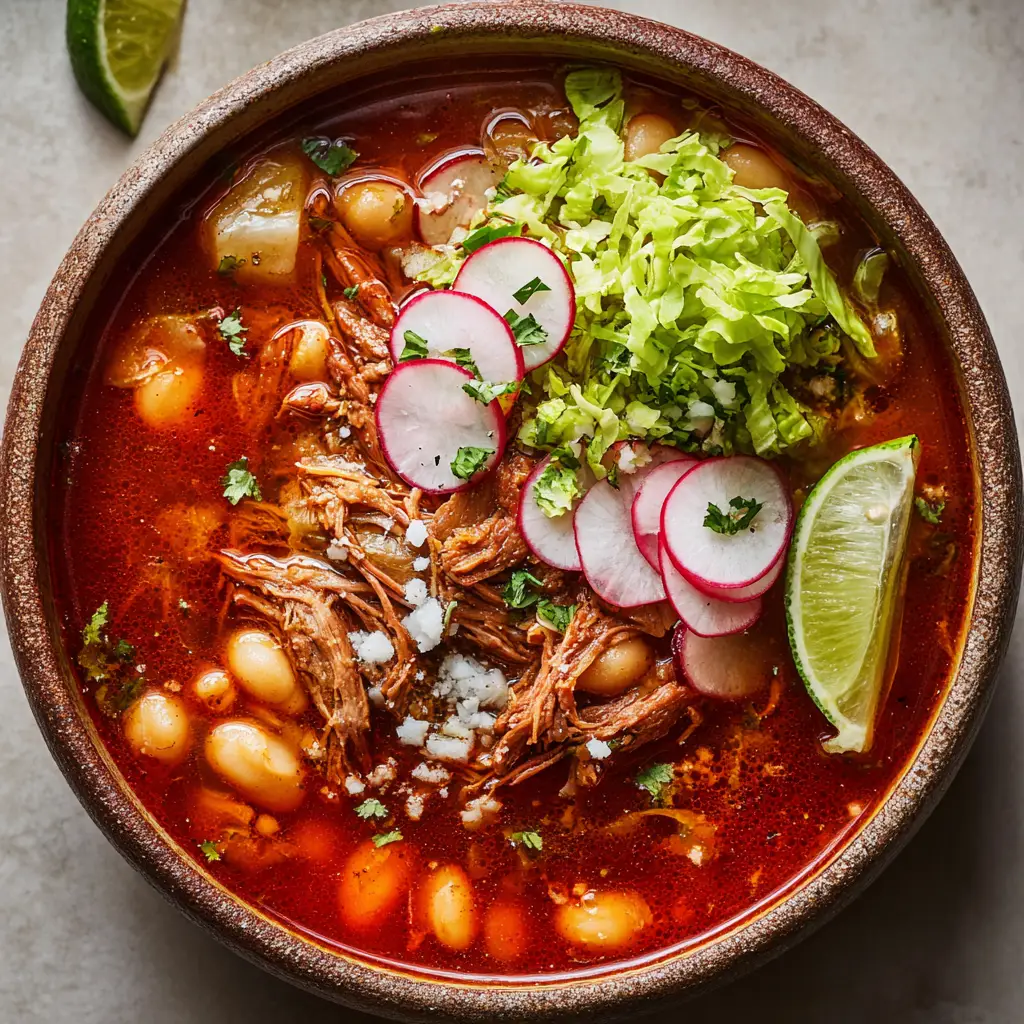
Why This Pozole Rojo Will Become Your New Favorite
This isn’t just another soup recipe. This is a guide to creating a truly memorable meal that hits every note of flavor and texture. Here’s what makes this Pork Pozole Recipe stand out:
- A Deep, Rich, and Vibrant Broth: We use a blend of classic dried Mexican chiles to create a broth that is visually stunning and packed with layers of earthy, slightly smoky flavor, without overwhelming heat.
- Impossibly Tender Pork: The secret is slow-simmering pork shoulder. This method breaks down the connective tissue, yielding succulent, fall-apart meat that soaks up all the goodness of the chile broth.
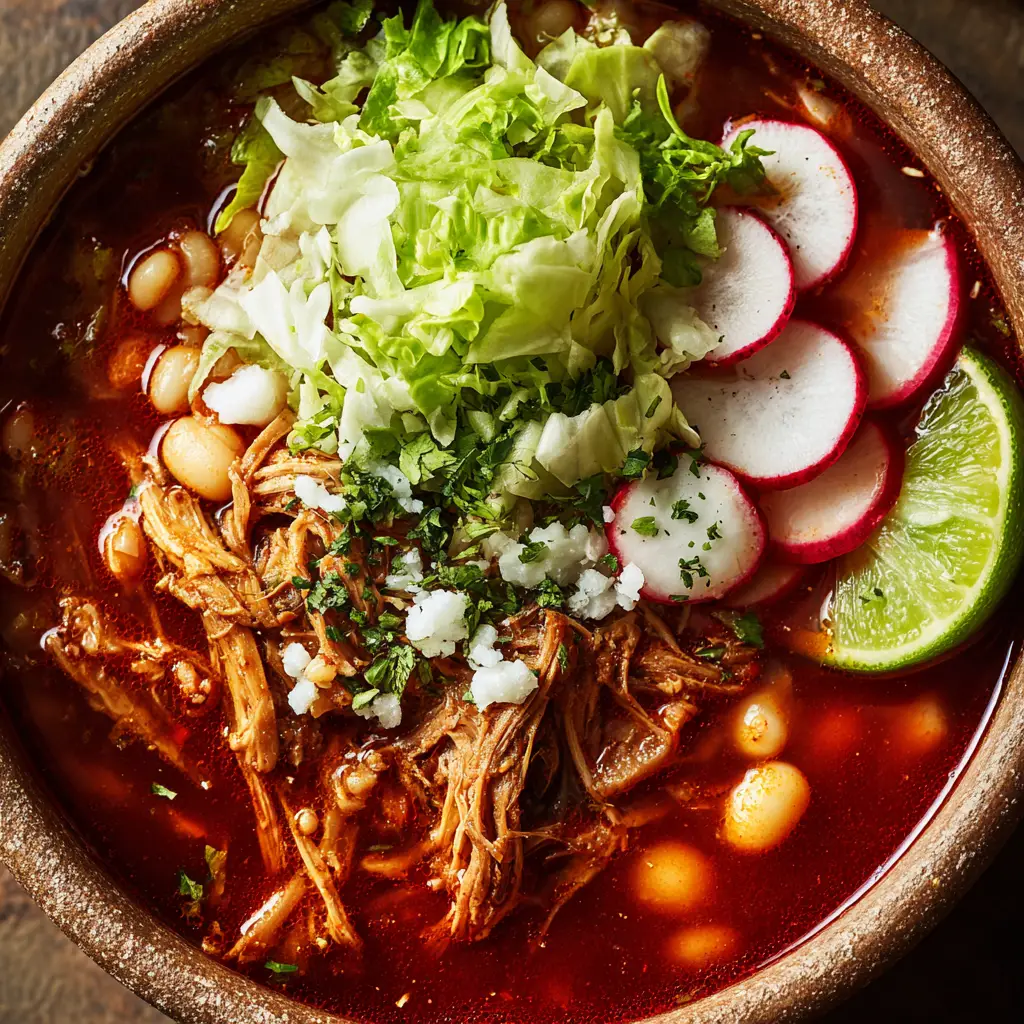
- The Perfect Balance of Toppings: The garnishes are not an afterthought; they are essential. The cool, crisp crunch of shredded cabbage and radish cuts through the richness, while onion, oregano, and a squeeze of fresh lime brighten every single bite.
The Anatomy of a Perfect Bowl of Pozole
Achieving the authentic taste and look of this Pork Pozole Recipe starts with quality ingredients. Each element plays a crucial role in building the final flavor profile.
For the Rich Chile Broth & Pork
Pork Shoulder: You’ll need 3 lbs (1.4 kg) of boneless pork shoulder (Boston butt), cut into 2-inch chunks. This cut is ideal for slow cooking, becoming incredibly tender and easy to shred.
Dried Chiles: The heart of our red broth comes from 4 Guajillo chiles and 2 Ancho chiles. Guajillo chiles provide a bright red color and mild, tangy flavor, while Ancho chiles add a deep, smoky sweetness.
Aromatics: A whole white onion, peeled and quartered, along with 6 cloves of garlic, peeled and smashed, create the aromatic foundation of the stew.
Chicken Broth: Use 8 cups (1.9 liters) of low-sodium chicken broth. This adds a layer of savory depth that you can’t get from water alone.
Mexican Oregano: You will need 1 tbsp (5g) of dried Mexican oregano. It has a more floral, citrusy note than its Mediterranean counterpart and is crucial for authentic flavor.
Hominy: Two 25-ounce (700g) cans of white hominy, drained and rinsed, are essential. These plump, chewy kernels are the signature ingredient of pozole.
Olive Oil: Just 2 tbsp (30ml) of olive oil are needed to sear the pork, creating a flavorful crust that enriches the broth.
Seasoning: We’ll use 1 tsp (5g) of kosher salt and ½ tsp (2.5g) of black pepper, with more to taste.
For the Essential Garnishes
Green Cabbage: Finely shredded green cabbage provides a fresh, bright crunch. You’ll want about 2 cups (200g).
Radishes: Thinly sliced radishes offer a crisp, peppery bite. A bunch of about 6-8 radishes is perfect.
White Onion: One small white onion, finely diced, adds a sharp, clean flavor.
Limes: Fresh lime wedges are non-negotiable for that final squeeze of bright acidity.
Essential Tools for Crafting Your Pozole
You don’t need a host of specialized gadgets for this recipe. A few key pieces of kitchen equipment will ensure your Pork Pozole Recipe comes out perfectly.
- Large Dutch Oven or Stockpot: A heavy-bottomed pot that’s at least 6 quarts is necessary for searing the pork and simmering the stew without scorching.
- High-Speed Blender: This is critical for creating a smooth, vibrant chile sauce from the rehydrated peppers.
- Fine-Mesh Sieve: Straining the chile purée is a crucial step to remove any tough skins or seeds, resulting in a silky-smooth broth.
- Tongs and Forks: Essential for handling the pork and shredding it easily once it’s tender.
Bringing Your Vibrant Pork Pozole Recipe to Life
Follow these steps closely, paying attention to the sensory cues, to build your pozole from a few simple ingredients into a complex, soul-warming stew.
Step 1: Awaken the Chiles
First, remove the stems and seeds from the dried Guajillo and Ancho chiles. Heat a dry skillet over medium heat and toast the chiles for about 30-60 seconds per side. You’ll know they’re ready when they become fragrant and slightly pliable. Be careful not to burn them, or they will become bitter. Immediately transfer the toasted chiles to a bowl and cover with hot water. Let them soak for 20-30 minutes until they are fully softened.
Step 2: Sear the Pork for Deep Flavor
While the chiles soak, pat the pork shoulder chunks dry with a paper towel and season generously with salt and pepper. Heat the olive oil in your Dutch oven over medium-high heat. Sear the pork in batches, ensuring you don’t overcrowd the pot. You’re looking for a deep, golden-brown crust on all sides. This step is critical for developing flavor. Once seared, remove the pork and set it aside.
Step 3: Create the Signature Red Broth
Transfer the softened chiles, 2 cloves of the smashed garlic, and about 1 cup (240ml) of their soaking liquid to a blender. Blend on high until a completely smooth purée forms. Strain this mixture through a fine-mesh sieve directly into the Dutch oven you used for the pork, pressing on the solids to extract as much liquid as possible. This ensures your final broth is velvety smooth.
Step 4: The Slow Simmer
Return the seared pork to the pot with the chile sauce. Add the quartered onion, the remaining 4 cloves of garlic, the chicken broth, and the dried Mexican oregano. Bring the mixture to a boil, then reduce the heat to low, cover, and let it simmer for 2.5 to 3 hours. The goal is fork-tender pork that shreds effortlessly. You’ll know it’s ready when the aroma fills your kitchen and the pork is falling apart.
Step 5: Assemble the Final Pozole
Carefully remove the pork from the pot and shred it using two forks. Return the shredded pork to the pot. Stir in the drained and rinsed hominy. Let the pozole simmer for another 15 minutes to allow the hominy to heat through and absorb the flavors of the broth. Taste and adjust seasoning with more salt if needed.
Step 6: Serve with Fresh Toppings
Ladle the hot pozole into bowls. Serve immediately, allowing everyone to customize their bowl with generous amounts of shredded green cabbage, thinly sliced radishes, diced white onion, and a fresh wedge of lime for squeezing. A final pinch of dried oregano on top is the perfect finishing touch.
Culinary Secrets for Pozole Perfection
- Don’t Skip the Toast: Toasting the dried chiles awakens their essential oils, deepening their flavor from one-dimensional spicy to complex and smoky.
- Strain for Silkiness: For a restaurant-quality pozole with a velvety broth, you must strain the chile purée. It’s an extra step that’s worth the effort.
- Patience is Key: The magic of this Pork Pozole Recipe happens during the slow simmer. Don’t rush this process; it’s how the pork becomes perfectly tender and the flavors meld together.
- Garnish Generously: The toppings are not optional! The fresh, crunchy textures and bright flavors are the perfect counterpoint to the rich, savory stew.
How to Store, Reheat, and Freeze Your Pozole
Pozole is one of those dishes that tastes even better the next day as the flavors continue to marry.
Storage: Store leftover pozole in an airtight container in the refrigerator for up to 4 days. Keep the garnishes separate and add them fresh when serving.
Reheating: Gently reheat the pozole in a pot on the stovetop over medium-low heat until warmed through. Avoid boiling, as it can make the pork tough.
Freezing: Pozole freezes beautifully. Let it cool completely, then transfer it to freezer-safe containers or bags, leaving a little room for expansion. It can be frozen for up to 3 months. Thaw overnight in the refrigerator before reheating.
Perfect Pairings for Your Pozole Rojo
While this Pork Pozole Recipe is a complete meal in a bowl, a few simple sides can round out the experience. For dipping into the rich broth, you can’t go wrong with some warm, cheesy breadsticks (coming soon) or a classic cornbread. For a refreshing contrast, a simple side like this cowboy cabbage salad (coming soon) works beautifully. If you want to offer another comforting option, a bowl of creamy Mexican street corn soup (coming soon) makes for a fantastic pairing.
Your Pork Pozole Questions, Answered
While the pozole itself is delicious, the traditional toppings are highly recommended as they are essential to the authentic experience. The fresh, crunchy cabbage, radishes, and onion provide a crucial textural and flavor contrast to the rich, warm stew, while a squeeze of lime adds a bright, acidic finish that balances everything perfectly.
Absolutely. After searing the pork and preparing the chile sauce on the stovetop, transfer everything (pork, sauce, broth, aromatics) to your slow cooker. Cook on low for 6-8 hours or on high for 4-5 hours, until the pork is tender. Stir in the hominy during the last 30 minutes of cooking.
Pork shoulder, also known as Boston butt, is the best choice for pozole. It has the ideal amount of fat and connective tissue that breaks down during the long, slow simmering process, resulting in exceptionally tender, flavorful, and easily shreddable meat.
Hominy is made from whole corn kernels that have been treated in a special process called nixtamalization. This process removes the hull and germ of the corn, causing it to puff up and take on a unique, satisfyingly chewy texture that is characteristic of authentic pozole.
The main difference is the sauce base. Red pozole (rojo), like this recipe, uses a broth made from dried red chiles like Guajillo and Ancho. Green pozole (verde) gets its color and flavor from tomatillos, cilantro, and fresh green chiles. White pozole (blanco) is the simplest, made without a heavy chile sauce, allowing the flavors of the pork and hominy to shine.
The Complete, Printable Pork Pozole Recipe
Authentic Pork Pozole Recipe for a Soul-Warming Meal
Ingredients
Equipment
Method
- Toast the de-stemmed and de-seeded Guajillo and Ancho chiles in a dry skillet over medium heat for 30-60 seconds per side until fragrant. Transfer to a bowl, cover with hot water, and let soak for 20-30 minutes until softened.
- Pat the pork chunks dry and season with salt and pepper. Heat olive oil in a large Dutch oven over medium-high heat. Sear the pork in batches until a deep golden-brown crust forms on all sides. Remove and set aside.
- Blend the softened chiles, 2 cloves of garlic, and 1 cup of their soaking liquid until smooth. Strain the purée through a fine-mesh sieve into the Dutch oven.
- Return the seared pork to the pot. Add the quartered onion, remaining 4 cloves of garlic, chicken broth, and Mexican oregano. Bring to a boil, then reduce heat to low, cover, and simmer for 2.5 to 3 hours until the pork is fork-tender.
- Remove the pork, shred it, and return it to the pot. Stir in the drained and rinsed hominy. Simmer for 15 more minutes. Taste and adjust seasoning.
- Ladle the hot pozole into bowls. Garnish generously with shredded cabbage, sliced radishes, diced white onion, and a fresh lime wedge.
Notes
Strain for Silkiness: For a restaurant-quality pozole with a velvety broth, you must strain the chile purée. It’s an extra step that’s worth the effort.
Patience is Key: The magic of this Pork Pozole Recipe happens during the slow simmer. Don't rush this process; it's how the pork becomes perfectly tender and the flavors meld together.
Garnish Generously: The toppings are not optional! The fresh, crunchy textures and bright flavors are the perfect counterpoint to the rich, savory stew.
Join the Pozole Conversation!
We believe this Pork Pozole Recipe will become a treasured favorite in your home. It’s more than just food; it’s a celebration of flavor, tradition, and the joy of a shared meal. We’d love to see your creations and hear how you made it your own!
Leave a comment below with any questions or variations you tried, and don’t forget to share your beautiful pozole bowls with us on Pinterest!