There is nothing quite like the comforting simplicity of a classic Baked Egg Custard Recipe. If you are craving a dessert that is both visually elegant and deeply nostalgic, this is the exact dish you need. This recipe produces a perfectly smooth pale yellow egg custard base that melts in your mouth with every single bite.
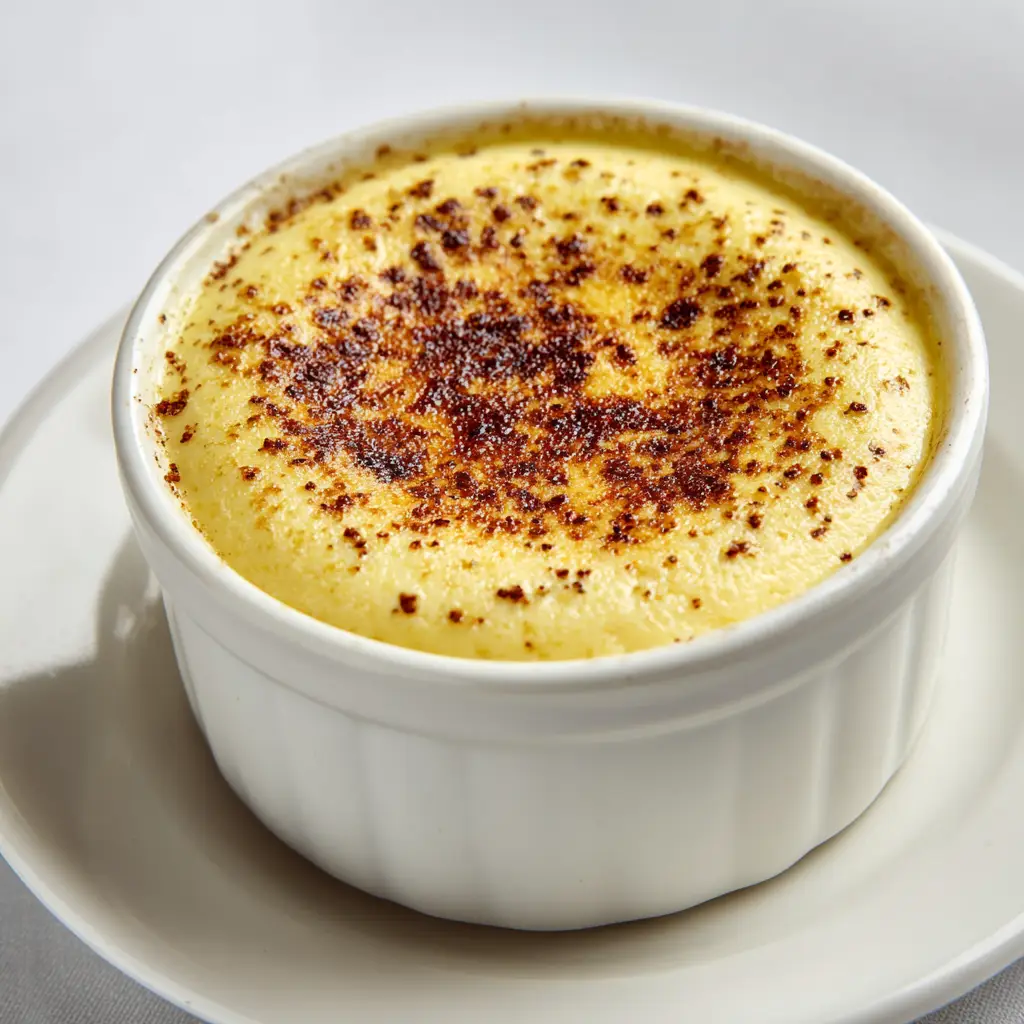
When you pull these small round white ceramic ramekins from the oven, you will immediately notice the delicate slightly golden-brown baked skin on top. That signature skin is the hallmark of a traditional, beautifully executed custard. Lightly dusted with fine specks of ground brown nutmeg, it offers a warm, aromatic finish that perfectly balances the sweet vanilla filling.
Whether you are hosting a Sunday dinner or just need a cozy, chilled dessert to finish off the week, this recipe delivers on all fronts. With just a handful of staple ingredients, you can master a bakery-level treat in your own kitchen. Let’s dive into the science of making this flawlessly smooth.
Why You’ll Love This Recipe
- Perfect Textural Contrast: You get a delightfully smooth pale yellow egg custard base hidden beneath a delicate slightly golden-brown baked skin.
- Aromatic Finish: The fine specks of ground brown nutmeg toasted directly onto the surface infuse the whole kitchen with a cozy, warm scent.
- Simple Ingredients: You do not need any artificial thickeners—just the natural binding power of eggs and milk.
- Make-Ahead Friendly: This dessert sets beautifully in the fridge, making it an ideal pre-planned treat for busy hosting days.
Ingredients & Substitutions
Whole Milk
You will need 2 cups (480ml) of high-quality whole milk. The fat content is absolutely crucial for creating the smooth pale yellow egg custard base without it turning watery.
Large Eggs
Use 3 large eggs at room temperature to form the structural backbone of the custard. The yolks provide that gorgeous pale yellow color and rich, velvety mouthfeel.
Granulated Sugar
We use 1/3 cup (66g) of white granulated sugar to gently sweeten the dish. It also aids in caramelization, helping to form that delicate slightly golden-brown baked skin.
Vanilla Extract
Add 1 tsp (5ml) of pure vanilla extract for foundational flavor. The vanilla perfectly complements the warm spices baked onto the top.
Kosher Salt
Just 1/8 tsp (0.75g) of kosher salt is necessary as an invisible flavor enhancer. It breaks through the richness of the milk and eggs, amplifying the sweet notes.
Ground Brown Nutmeg
You will need 1/4 tsp (0.5g) of ground brown nutmeg for dusting. Sprinkling this on top before baking ensures it embeds into the skin, offering a stunning visual and sensory aroma.

Equipment Needed
To achieve the exact visual results described, you will need four small round white ceramic ramekins (about 6 oz / 175ml capacity each). You also need a deep roasting pan to act as a water bath (bain-marie), which protects the delicate eggs from scrambling. A fine-mesh strainer and a sturdy wire whisk are required to guarantee a lump-free, silky interior.
Step-by-Step Instructions
1. Prepare the Water Bath and Ramekins
Preheat your oven to 325°F (165°C). Place your four small round white ceramic ramekins into a deep 9×13-inch baking dish. Boil a kettle of water so it is ready for your water bath later. Creating a gentle steam environment is the only way to ensure the custard bakes gently without curdling.
2. Scald the Whole Milk
Pour the 2 cups (480ml) of whole milk into a medium saucepan over medium heat. Warm the milk until tiny bubbles form around the edges, reaching about 160°F (71°C), but do not let it boil. Scalding the milk helps the sugar dissolve instantly and cuts down the overall baking time.
3. Whisk the Eggs and Sugar
In a large mixing bowl, vigorously whisk the 3 large eggs, 1/3 cup (66g) granulated sugar, 1 tsp (5ml) vanilla extract, and 1/8 tsp (0.75g) kosher salt. Whisk until the mixture turns slightly pale and the sugar feels dissolved. Do not over-whip into a foam, as trapped air bubbles will ruin the smooth pale yellow egg custard base.
4. Temper the Egg Mixture
Slowly drizzle the hot milk into the egg mixture, whisking constantly to temper the eggs. If you pour too quickly, you will end up with scrambled eggs. Once fully combined, pour the liquid through a fine-mesh strainer into a large measuring cup with a pour spout to remove any coagulated protein strands.
5. Pour, Dust, and Bake
Evenly divide the strained custard base into the prepared ceramic ramekins. Generously dust the top surface of each with the ground brown nutmeg. Carefully pour the boiling water into the roasting pan until it reaches halfway up the sides of the ramekins.
6. Look for Visual Cues of Doneness
Bake for 35 to 45 minutes. Watch closely for a delicate slightly golden-brown baked skin to form across the top. Gently tap the side of the ramekin; the edges should be completely set, but the center should still have a slight jiggle, similar to gelatin.
7. Cool and Chill
Carefully remove the ramekins from the hot water bath using tongs and set them on a wire rack to cool to room temperature. Once cooled, cover loosely with plastic wrap and refrigerate for at least 3 hours to allow the custards to set perfectly firm.
Expert Tips for Success
- Strain for Silkiness: Never skip pouring the mixture through a fine-mesh sieve. This single step is the secret to a perfectly smooth pale yellow egg custard base.
- Avoid Boiling Water Drops: When pouring your hot water into the roasting pan, do not let any water splash into the ramekins. Water will ruin the delicate golden-brown baked skin.
- The Jiggle Test: Overbaking causes the eggs to weep liquid (syneresis). Pull them from the oven the moment the edges are firm but the center still wobbles slightly.
- Pre-Bake Dusting: Always apply the fine specks of ground brown nutmeg before placing the ramekins in the oven. The spice must bake into the top layer to create the traditional crust.
Storage & Reheating/Freezing
Store your cooled baked egg custards in the refrigerator, covered securely with plastic wrap to prevent them from absorbing fridge odors. They will stay fresh and delicious for up to 3 days. Do not freeze this dessert; freezing alters the molecular structure of the eggs and milk, resulting in a separated, watery texture when thawed. This dish is meant to be enjoyed properly chilled straight from the fridge.
What to Serve With This
This light, creamy dessert is the perfect concluding act to a rich, hearty dinner. Try serving it after a warm, savory bowl of classic beef stew or a slow-simmered pot roast recipe. The cooling vanilla and nutmeg offer a wonderful palate cleanser after deeply savory meats.
If you are putting together a dessert table, this custard pairs beautifully with other classic treats. Serve it alongside delicate Portuguese custard tarts or a rich Earl Grey tiramisu. For an afternoon treat, pair a chilled ramekin with a steaming mug of French hot chocolate for the ultimate comfort experience.
Frequently Asked Questions
Absolutely. Baked egg custard needs at least 3 hours to chill and set in the refrigerator anyway. You can easily make it up to 2 days in advance, making it a perfect prep-ahead dessert.
Yes. A water bath insulates the delicate eggs from the harsh, direct heat of the oven. This gentle steam environment is strictly required to achieve a smooth, silky texture rather than a scrambled, rubbery one.
The skin forms naturally as the proteins in the milk and eggs are exposed to the hot, dry air above the water bath. Dusting the top with granulated sugar or nutmeg before baking enhances this beautiful browning process.
A watery custard is usually the result of overbaking, a process known as syneresis where the egg proteins tighten too much and squeeze out liquid. Always remove the custard from the oven while the center still has a gelatin-like jiggle.
Straining the mixture through a fine-mesh sieve catches any undissolved sugar, hidden chalazae (the white stringy part of the egg), or accidentally scrambled bits of egg from the hot milk. This guarantees an absolutely flawless, smooth bite.
Closing Notes & Call to Action
This classic Baked Egg Custard Recipe is a testament to how simple ingredients can transform into something truly magical. The contrast between the smooth pale yellow base and the delicate golden-brown skin is sure to impress your guests and family alike.
If you tried this recipe and achieved that perfect nutmeg-dusted crust, please leave a rating and comment below! Do not forget to subscribe to our newsletter for more comforting, classic recipes delivered straight to your inbox. Pin this recipe to your favorite dessert boards on Pinterest to save it for later!
Recipe Card
The Best Baked Egg Custard Recipe
Ingredients
Equipment
Method
- Preheat your oven to 325°F (165°C). Place your four small round white ceramic ramekins into a deep 9x13-inch baking dish. Boil a kettle of water so it is ready for your water bath later.
- Pour the 2 cups (480ml) of whole milk into a medium saucepan over medium heat. Warm the milk until tiny bubbles form around the edges, reaching about 160°F (71°C), but do not let it boil.
- In a large mixing bowl, vigorously whisk the 3 large eggs, 1/3 cup (66g) granulated sugar, 1 tsp (5ml) vanilla extract, and 1/8 tsp (0.75g) kosher salt until slightly pale.
- Slowly drizzle the hot milk into the egg mixture, whisking constantly to temper the eggs. Pour the liquid through a fine-mesh strainer into a large measuring cup.
- Evenly divide the strained custard base into the ramekins. Dust the top with ground brown nutmeg. Pour the boiling water into the roasting pan until it reaches halfway up the sides of the ramekins.
- Bake for 35 to 45 minutes until a delicate golden-brown baked skin forms. The edges should be completely set, but the center should still have a slight jiggle.
- Carefully remove the ramekins from the hot water bath. Cool to room temperature, cover loosely, and refrigerate for at least 3 hours before serving.
Notes
Tip 2: Do not overbake. Remove from the oven when the center still jiggles slightly to prevent the custard from weeping water.