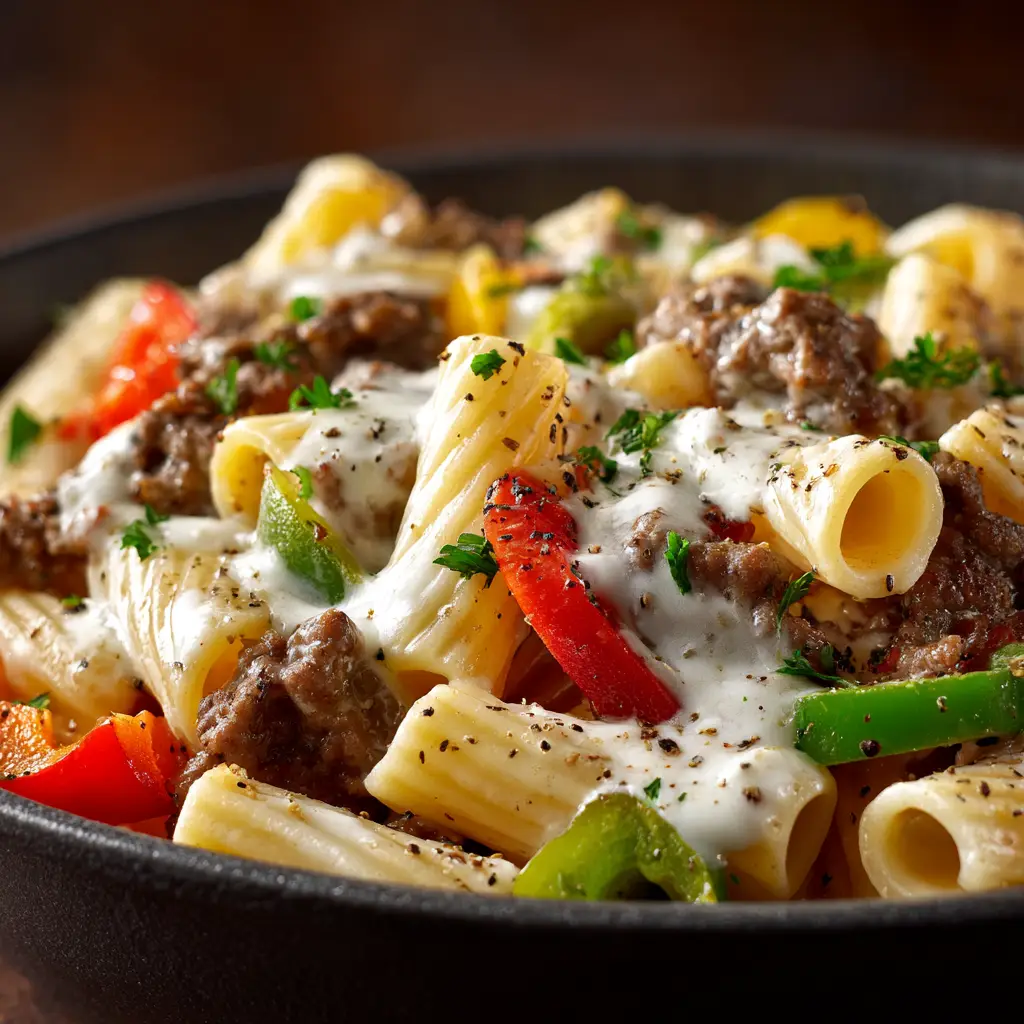
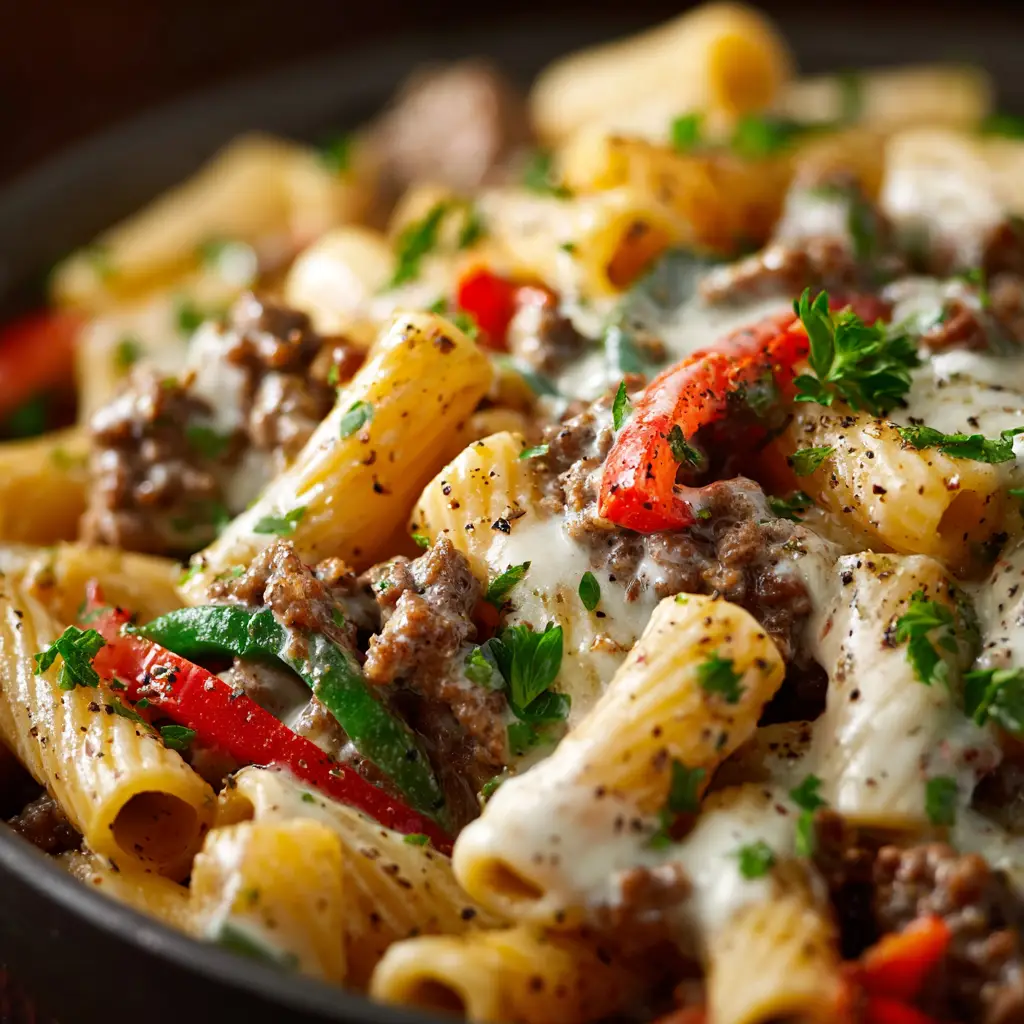
Imagine all the savory, meaty, and cheesy goodness of a classic Philly cheesesteak sandwich, but tossed with tender pasta in a ridiculously creamy sauce. That’s exactly what you get with this Philly Cheesesteak Pasta recipe. We’re transforming the iconic sandwich into an easy, one-pot dinner that’s guaranteed to become a new family favorite. It’s the ultimate comfort food mashup, perfect for a busy weeknight when you’re craving something hearty and satisfying without a mountain of dishes to wash.
Why You’ll Love This Philly Cheesesteak Pasta Recipe
This isn’t just another pasta dish; it’s a game-changer for your dinner rotation. Here’s why you’ll fall in love with it:
- One-Pot Simplicity: Everything cooks in a single pot, from searing the steak to simmering the pasta. This means minimal cleanup and maximum flavor.
- Authentic Flavor: We use thinly sliced steak, sautéed peppers and onions, and a trio of cheeses to capture that true Philly cheesesteak taste.
- Unbelievably Creamy Sauce: Cream cheese is the secret weapon, creating a velvety, rich sauce that clings to every piece of pasta.
- Weeknight Fast: From start to finish, this flavor-packed meal is ready in about 40 minutes.
The Key Ingredients for Authentic Flavor
The magic of this dish lies in using the right components. Here’s what you’ll need to nail that perfect cheesesteak flavor.
The Best Steak for Cheesesteak Pasta
Traditionally, ribeye is the go-to for Philly cheesesteaks due to its marbling and tenderness. Sirloin is another excellent, slightly leaner option. The most important tip is to slice the steak as thinly as possible against the grain. Freezing the steak for 20-30 minutes beforehand makes it much easier to get those paper-thin slices.
The Perfect Cheese Trio
We use a combination of three cheeses for the ultimate creamy and flavorful sauce. Provolone provides that classic, sharp cheesesteak bite. Cream cheese is the secret to a smooth, velvety sauce. A little bit of shredded mozzarella adds a wonderful, gooey texture that brings it all together.
Veggies & Aromatics
You can’t have a Philly cheesesteak without sautéed onions and green bell peppers. They provide a sweet, slightly sharp contrast to the rich beef and cheese. Garlic and a touch of Worcestershire sauce build a deep, savory foundation for the sauce.
The Pasta and Sauce Base
A short, sturdy pasta shape like medium shells, penne, or rigatoni is perfect here. They have plenty of nooks and crannies to catch the creamy sauce. The sauce itself is built on a base of rich beef broth, which the pasta cooks in directly, absorbing all that delicious flavor.
How to Make Philly Cheesesteak Pasta Step-by-Step
Follow these simple steps to create a show-stopping one-pot meal.
- Sear the Steak: Season your thinly sliced steak with salt and pepper. Heat olive oil in a large pot or Dutch oven over medium-high heat. Add the steak in a single layer and cook for 1-2 minutes per side, just until browned. Don’t overcrowd the pan; work in batches if needed. Remove the steak and set it aside.
- Sauté the Veggies: In the same pot, add the diced onion and bell pepper. Cook for 5-7 minutes, until softened and lightly browned. Add the minced garlic and cook for another minute until fragrant.
- Build the Sauce: Pour in the beef broth and Worcestershire sauce, scraping up any browned bits from the bottom of the pot. Bring the mixture to a simmer.
- Cook the Pasta: Stir in the uncooked pasta. Bring back to a simmer, then reduce the heat to medium-low, cover, and cook for 12-15 minutes, or until the pasta is al dente. Stir occasionally to prevent sticking.
- Make It Cheesy: Once the pasta is cooked, turn off the heat. Stir in the cream cheese until it’s completely melted and the sauce is smooth. Gradually mix in the shredded provolone and mozzarella until you have a luscious, cheesy sauce.
- Combine and Serve: Return the cooked steak to the pot and stir everything together. Let it sit for a few minutes for the flavors to meld. Season with more salt and pepper to taste, and serve immediately.
Tips from a Pro: Nailing the Perfect Texture and Taste
- Don’t Overcook the Steak: A quick sear is all you need. The steak will finish cooking when you add it back to the hot pasta, ensuring it stays tender.
- Use Freshly Shredded Cheese: Pre-shredded cheeses often contain anti-caking agents that can make your sauce gritty. Shredding your own provolone and mozzarella will result in a much smoother sauce.
- Watch the Pasta: Since the pasta cooks in the sauce, keep an eye on it to ensure it doesn’t absorb too much liquid too quickly. If the sauce seems too thick, you can add a small splash of beef broth or milk to thin it out. If you love a cheesy steak dinner, you might also enjoy these Ground Beef Philly Cheesesteaks.
Fun Variations to Try
While this recipe is fantastic as is, it’s also easy to customize. For a different take on a cheesy, meaty pasta dish, consider our popular Bacon Cheeseburger Pasta.
- Add Mushrooms: Sauté sliced mushrooms along with the onions and peppers for an extra layer of earthy flavor.
- Make it Spicy: Add a pinch of red pepper flakes with the garlic or stir in some sliced jalapeños for a kick of heat.
- Use Different Meats: This recipe works wonderfully with ground beef or even shredded rotisserie chicken for a quick and easy variation, much like our favorite Crack Chicken Sandwiches.
Storing and Reheating Leftovers
Store any leftover Philly Cheesesteak Pasta in an airtight container in the refrigerator for up to 3 days. To reheat, gently warm it in a saucepan over low heat, adding a splash of milk or beef broth to loosen the sauce. You can also microwave it in short intervals, stirring in between.
Frequently Asked Questions
Absolutely! To use ground beef, brown 1 lb of ground beef with the onions and peppers, breaking it up with a spoon. Drain any excess grease before adding the garlic and proceeding with the recipe as written.
The key is to partially freeze the steak for about 20-30 minutes before slicing. This firms up the meat, making it much easier to slice thinly and uniformly with a sharp knife.
Ribeye is the most traditional and flavorful choice due to its high-fat content and tenderness. However, top sirloin is a fantastic, slightly leaner alternative that is also very tender when sliced thinly against the grain.
We use a combination of provolone for that classic sharp flavor, cream cheese for ultimate creaminess, and mozzarella for a gooey texture. You could also substitute some of the provolone for Cheez Whiz or American cheese for an extra smooth sauce.
This is a hearty, all-in-one meal, so simple sides are best. A crisp green salad with a vinaigrette, some garlic bread, or steamed green beans would all be excellent accompaniments.
Enjoy Your Creamy Pasta Dinner!
This Philly Cheesesteak Pasta recipe is more than just a meal; it’s a celebration of comfort food that brings everyone to the table. It’s cheesy, savory, and incredibly easy to make. If you try it, we’d love to hear from you! Leave a comment below or share a picture of your creation on Pinterest.
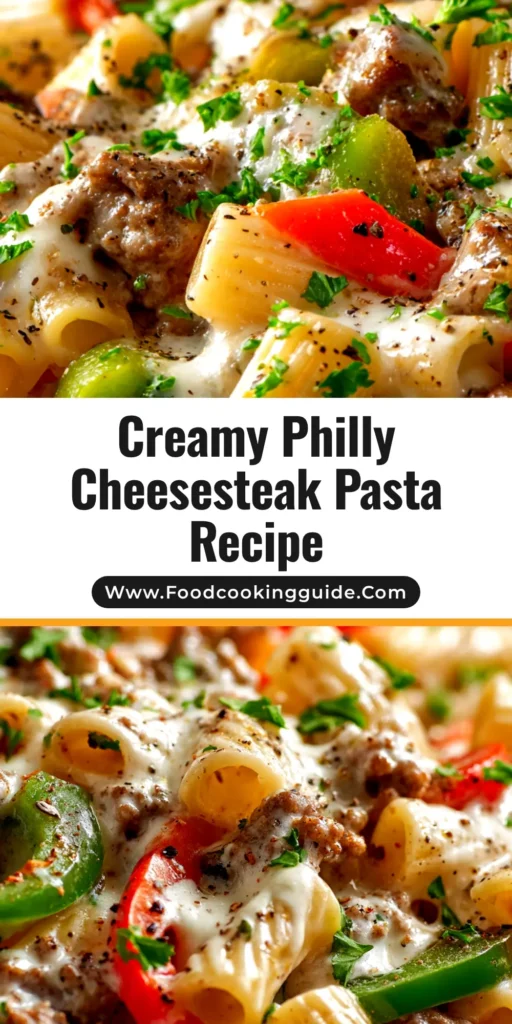
Philly Cheesesteak Pasta Recipe
Philly Cheesesteak Pasta: A Creamy, One-Pot Wonder
Ingredients
Equipment
Method
- Season thinly sliced steak with salt and pepper. Heat olive oil in a large pot or Dutch oven over medium-high heat. Add the steak in a single layer and cook for 1-2 minutes per side until browned. Remove steak and set aside.
- In the same pot, add the diced onion and bell pepper. Cook for 5-7 minutes until softened. Add minced garlic and cook for another minute until fragrant.
- Pour in the beef broth and Worcestershire sauce, scraping the bottom of the pot. Bring to a simmer, then stir in the uncooked pasta. Reduce heat to medium-low, cover, and cook for 12-15 minutes, or until pasta is al dente, stirring occasionally.
- Turn off the heat. Stir in the cubed cream cheese until fully melted and smooth. Gradually mix in the shredded provolone and mozzarella until the sauce is creamy.
- Return the cooked steak to the pot and stir to combine. Let it sit for a couple of minutes. Season with additional salt and pepper if needed and serve immediately.
Notes
Storage: Store leftovers in an airtight container in the refrigerator for up to 3 days.