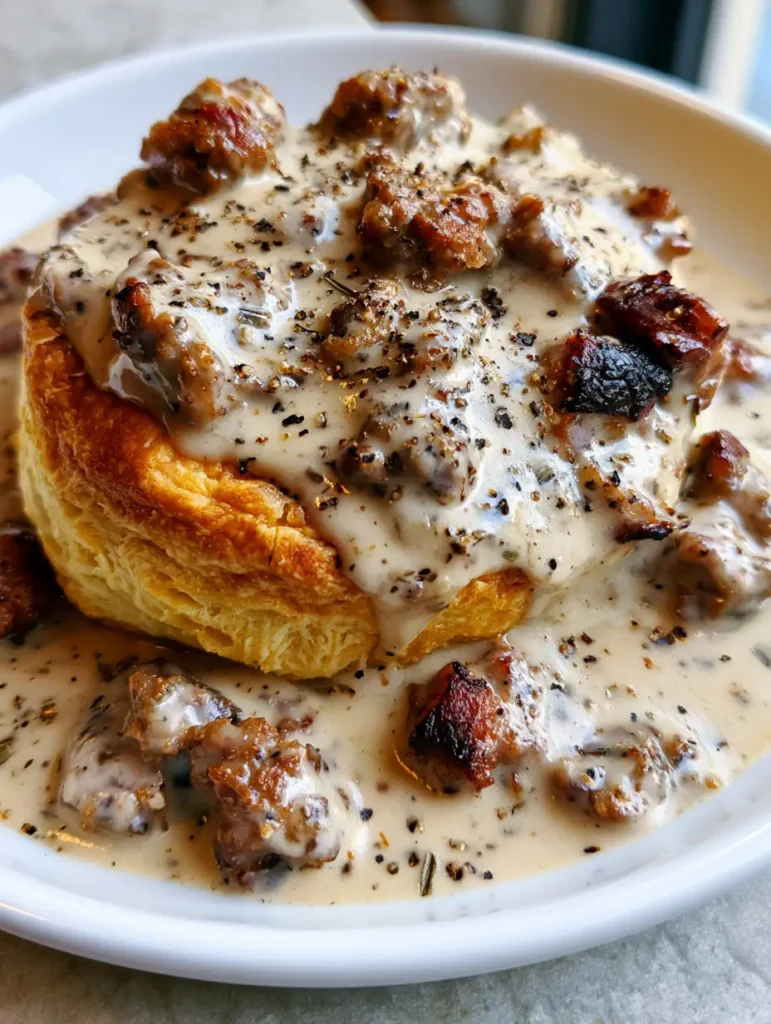
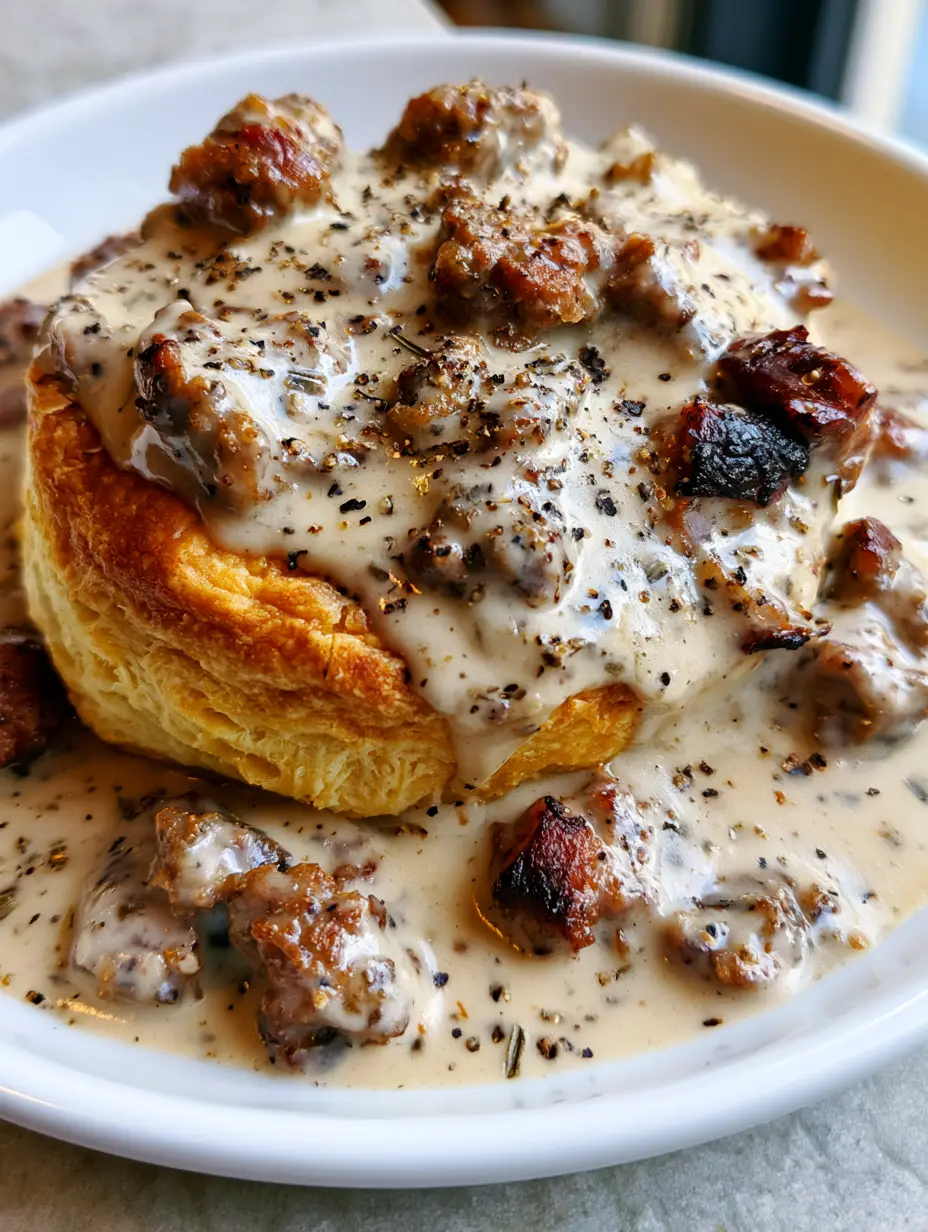
There is nothing quite like the sight of a split golden-brown flaky buttermilk biscuit resting on a white ceramic plate, waiting to be smothered. When you pour that thick, ivory-colored cream gravy over the top, you aren’t just making breakfast; you are crafting an experience of pure comfort. This Sausage Gravy is designed for those who crave deep, savory flavors and textures that linger on the palate.
Every spoonful of this dish offers a contrast between the tender, buttery layers of the biscuit and the robust, seared pork sausage crumbles. The visible charred edges of the meat provide a smoky depth that balances the richness of the cream sauce. Flecked with a generous amount of coarse-ground black pepper and tiny specks of dried rosemary, this recipe elevates a humble classic into a gourmet morning centerpiece.
Imagine the soft natural daylight hitting the creamy texture of the gravy, highlighting the rustic, simple plating on a neutral stone surface. This isn’t just a meal; it is a visual and sensory masterpiece. Whether you are hosting a weekend brunch or seeking a hearty start to your weekday, this guide ensures your result looks exactly like a professional food photograph.

Why This Peppery Rosemary Gravy Stands Above the Rest
- Forensic Flavor Depth: By searing the pork sausage until it develops charred edges, we unlock the Maillard reaction, providing a savory foundation that ordinary gravies lack.
- Textural Contrast: The combination of thick, ivory cream and coarse-ground black pepper creates a mouthfeel that is both silky and bold.
- Aromatic Sophistication: The addition of dried rosemary flakes introduces a woody, pine-like aroma that cuts through the richness of the dairy.
- Visual Perfection: This recipe is engineered to produce that iconic “ivory” hue, ensuring your plate looks as good as it tastes.
Essential Components for the Perfect Ivory Cream Sauce
1 lb (450g) High-Quality Pork Sausage: This is the heart of the dish, providing the essential fats and proteins that build the base of our gravy. Look for a breakfast-style sausage that crumbles easily in the pan.
1/3 cup (45g) All-Purpose Flour: The flour acts as the thickening agent, binding with the rendered pork fat to create a smooth, stable roux. This ensures your gravy has that thick, coat-the-back-of-a-spoon consistency.
3 cups (720ml) Whole Milk: Whole milk provides the necessary fat content to achieve the signature ivory color and rich mouthfeel. Using lower fat milks will result in a thinner, less satisfying sauce.
1/2 cup (120ml) Heavy Cream: A splash of heavy cream is the secret to achieving that ultra-luxurious, velvet-like texture. It softens the bite of the pepper and adds a subtle sweetness to the finish.
2 tsp (4g) Coarse Ground Black Pepper: The large flakes of pepper are crucial for both the visual aesthetic and the characteristic “bite” of a traditional Southern gravy. Do not use fine-ground pepper here; the coarse texture is non-negotiable.
1 tsp (1g) Dried Rosemary Flakes: Rosemary adds a sophisticated herbal note that transforms the flavor profile. Ensure the flakes are crushed slightly between your fingers before adding to release their essential oils.
1/2 tsp (3g) Sea Salt: Salt is the primary flavor enhancer, pulling together the savory notes of the pork and the earthiness of the rosemary. Adjust this at the very end to suit your personal preference.
8 Large Buttermilk Biscuits: You need a sturdy, flaky vehicle for the gravy. Whether homemade or high-quality store-bought, ensure they are baked until golden-brown and split while still steaming hot.
The Culinary Toolkit for Success
To achieve the seared edges and thick consistency described in our visual blueprint, you will need a heavy-bottomed cast iron skillet or a stainless steel pan. These materials retain heat efficiently, allowing the sausage to brown deeply without boiling in its own juices. A flat-edged wooden spoon is also essential for scraping up the “fond”—those flavorful brown bits stuck to the bottom of the pan.
You will also need a whisk to ensure the milk and cream incorporate into the roux without forming lumps. A pepper grinder set to a coarse setting will provide the freshest flavor and the specific visual flecks required for the authentic look of this Sausage Gravy.
Mastering the Sear: Step-by-Step Instructions
Developing the Sausage Crust
Place your skillet over medium-high heat and add the pork sausage. Use your wooden spoon to break the meat into small, bite-sized crumbles, but then leave it undisturbed for 2-3 minutes. This patience is key to developing those charred, well-browned edges seen in the visual prompt.
Flip the crumbles and continue cooking until the meat is fully cooked through and a deep golden-brown crust has formed on at least 40% of the sausage surface. Do not drain the fat; this liquid gold is the base of your roux and carries all the rosemary and pepper flavors.
Building the Ivory Roux
Reduce the heat to medium and sprinkle the all-purpose flour evenly over the seared sausage. Stir constantly for about 1-2 minutes. You are looking for the flour to absorb the fat and turn a light tan color, but it should not turn dark brown. This “blond roux” stage is what preserves the ivory color of the final gravy.
Listen for a gentle sizzling sound; this indicates the raw flour taste is being cooked out while the thickening power is being activated. If the pan looks too dry, you can add 1 tbsp (14g) of unsalted butter to ensure all the flour is hydrated.
The Slow Temper and Simmer
Slowly pour in the whole milk, about 1/2 cup (120ml) at a time, whisking vigorously after each addition. This gradual process prevents lumps and ensures a silky texture. Once all the milk is in, add the heavy cream, the coarse ground black pepper, and the dried rosemary flakes.
Bring the mixture to a gentle simmer, not a rolling boil. As the gravy heats, it will thicken significantly. Continue to stir, scraping the bottom of the pan to incorporate the charred bits of sausage into the sauce. The gravy is ready when it is thick enough to heavily coat the spoon, usually after 5-7 minutes of simmering.
Expert Tips for a Flawless Breakfast
- Cold Dairy, Hot Pan: Adding cold milk to a hot roux can actually help prevent clumping if you whisk quickly. The temperature contrast helps the starch granules separate.
- The Rosemary Release: If you find dried rosemary too “woody,” mince it finely before adding it to the pan. This ensures the specks are tiny and the flavor is evenly distributed.
- Adjusting Consistency: Gravy thickens as it cools. If it becomes too thick before serving, whisk in a tablespoon of milk to loosen it back to that perfect ivory pour.
- Seasoning Strategy: Always taste for salt after the gravy has thickened. The reduction process concentrates flavors, and you don’t want to over-salt early on.
Optimal Storage and Reheating Methods
Leftover Sausage Gravy can be stored in an airtight container in the refrigerator for up to 3 days. Because of the high dairy and fat content, it will solidify into a thick paste when cold. This is perfectly normal and expected for a high-quality cream sauce.
To reheat, place the gravy in a saucepan over low heat. Add a splash of milk or water (about 1 tbsp per cup of gravy) to restore the creamy consistency. Whisk constantly until steaming hot. We do not recommend freezing this gravy, as the dairy may break and become grainy upon thawing.
Perfect Pairings for a Southern Feast
While biscuits are the traditional choice, this Sausage Gravy is versatile enough to complement a variety of breakfast dishes. For a unique twist on morning proteins, try serving a side of sausage pancake muffins to double down on those savory pork notes.
If you are looking for a more balanced brunch spread, the peppery notes of the gravy pair beautifully with the bold flavors of mexican potatoes. If you find yourself with extra sausage, you might even consider prepping a batch of black beans and rice with sausage for a hearty lunch the following day. For those who enjoy a creamy pasta texture, the technique of emulsifying fats in this recipe is very similar to making an authentic cacio e pepe.
Common Questions About Country Gravy
Yes, but use it sparingly as fresh rosemary is more potent. Mince it very finely so it integrates into the gravy without creating a needle-like texture.
Avoid stirring the sausage constantly. Let it sit undisturbed in a hot cast iron skillet for several minutes to allow the Maillard reaction to create those deep brown, charred edges.
The secret lies in the roux. Ensure you use enough flour (1/3 cup for every 1 lb of sausage) and simmer the gravy for at least 5-7 minutes to allow the starches to fully expand and thicken the milk.
Reheat on the stovetop over low heat, adding a tablespoon of milk to loosen the sauce as it warms. Avoid the microwave if possible, as it can cause the fat to separate.
Grey gravy usually happens if the flour is cooked too long (becoming a dark roux) or if there isn’t enough dairy. Use whole milk and a splash of heavy cream to maintain that bright, ivory aesthetic.
The Ultimate Rosemary Sausage Gravy Recipe
Sausage Gravy: The Ultimate Creamy Southern Comfort with Seared Pork and Rosemary
Ingredients
Equipment
Method
- Add pork sausage to a large skillet over medium-high heat. Break into crumbles and sear until well-browned with visible charred edges, about 5-7 minutes.
- Sprinkle the flour over the cooked sausage and fat. Stir for 2 minutes until the flour is cooked through and turns a light ivory-tan color.
- Slowly whisk in the whole milk and heavy cream. Add the coarse black pepper and dried rosemary flakes. Simmer for 5-7 minutes until thick and creamy.
- Season with sea salt to taste. Serve immediately over warm, split golden-brown biscuits.
Notes
Always use coarse ground pepper for the correct visual flecks in the ivory sauce.

This Sausage Gravy represents the pinnacle of home-cooked comfort. By following the forensic visual cues—searing the sausage for charred edges and maintaining that thick ivory hue—you create a dish that is as beautiful as it is delicious. The addition of rosemary flakes provides a modern, aromatic twist that will have your guests asking for the secret ingredient.
We invite you to share your results! Did you get that perfect golden-brown crust on your biscuits? Did the rosemary add the perfect earthy note? Let us know in the comments below, and don’t forget to follow us on Pinterest for more visually stunning recipe inspiration.