There is a profound, almost poetic beauty in the simplicity of an Authentic Cacio e Pepe. Often referred to as the “soul of Rome,” this dish relies on a trifecta of humble ingredients—pasta, pecorino cheese, and black pepper—to create something far greater than the sum of its parts.
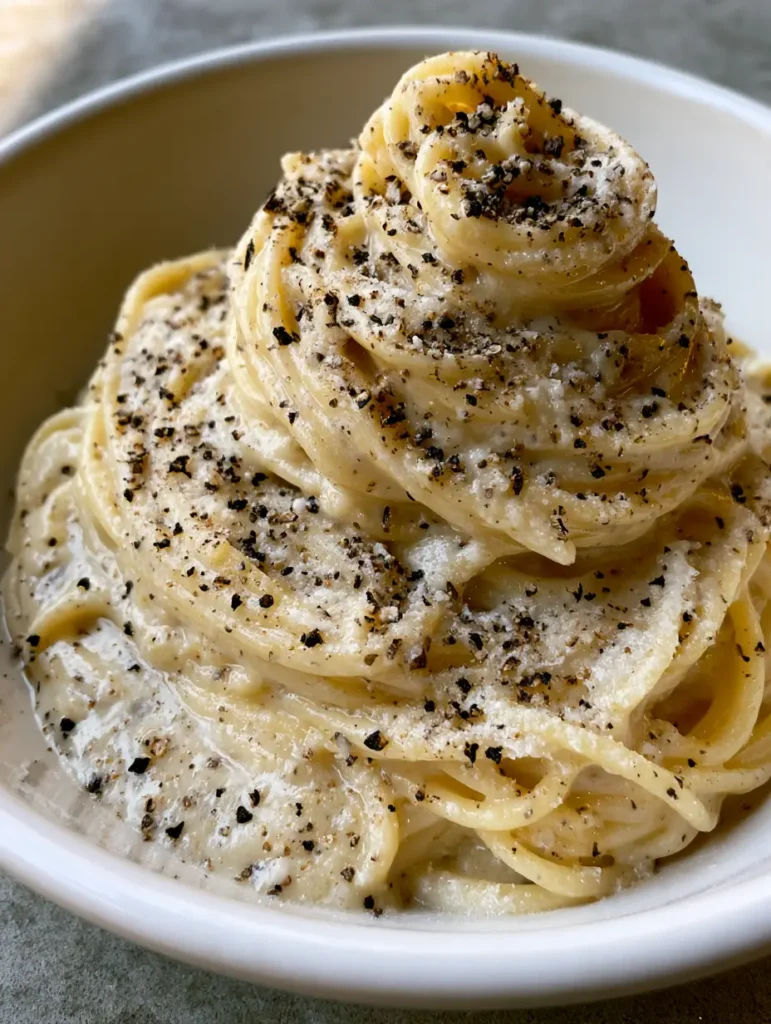
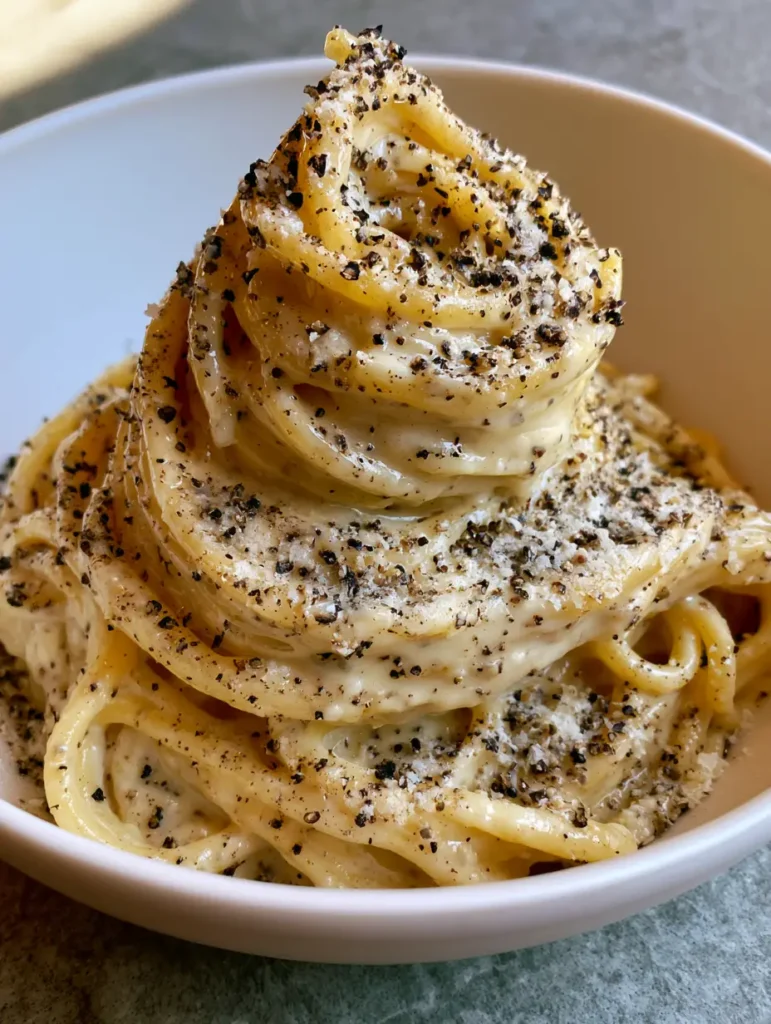
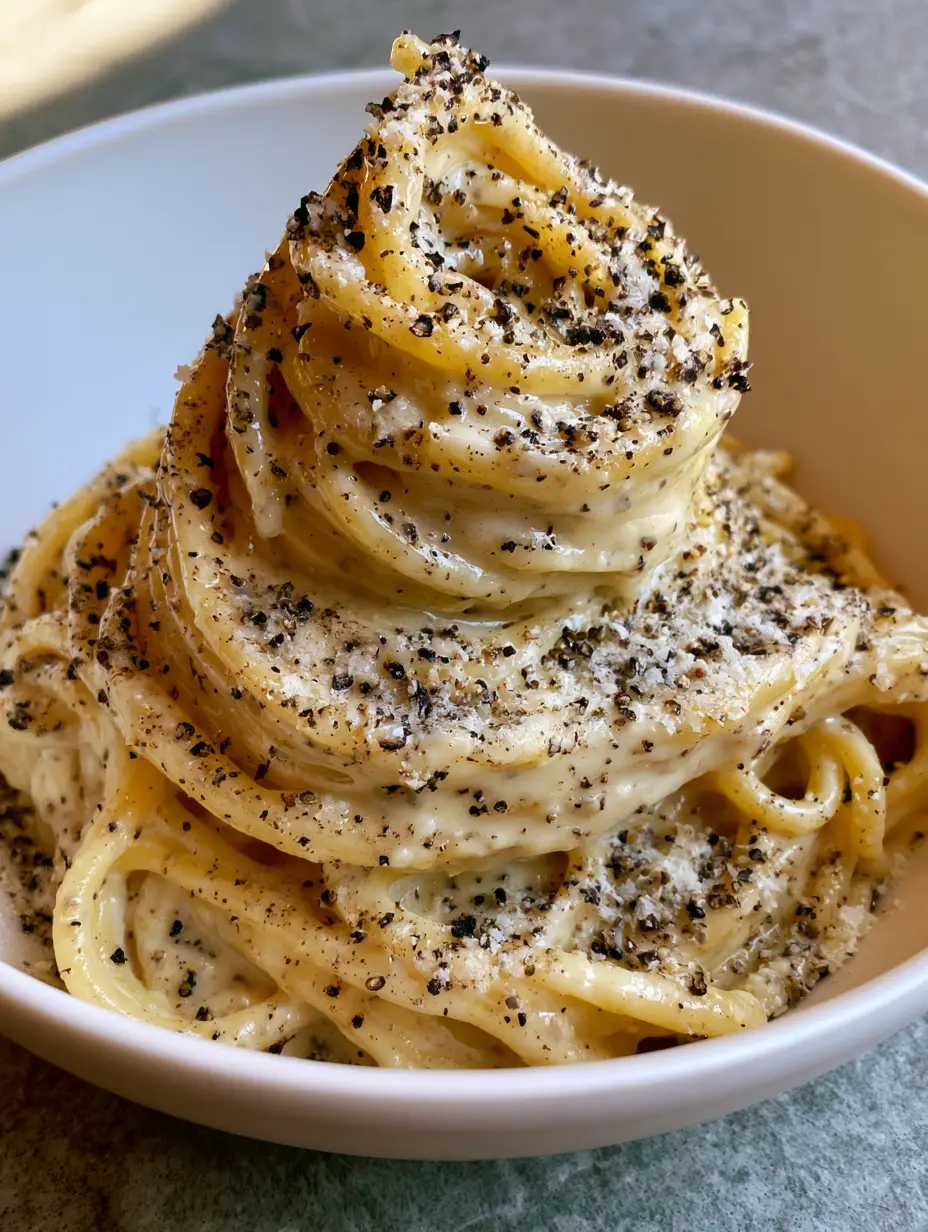
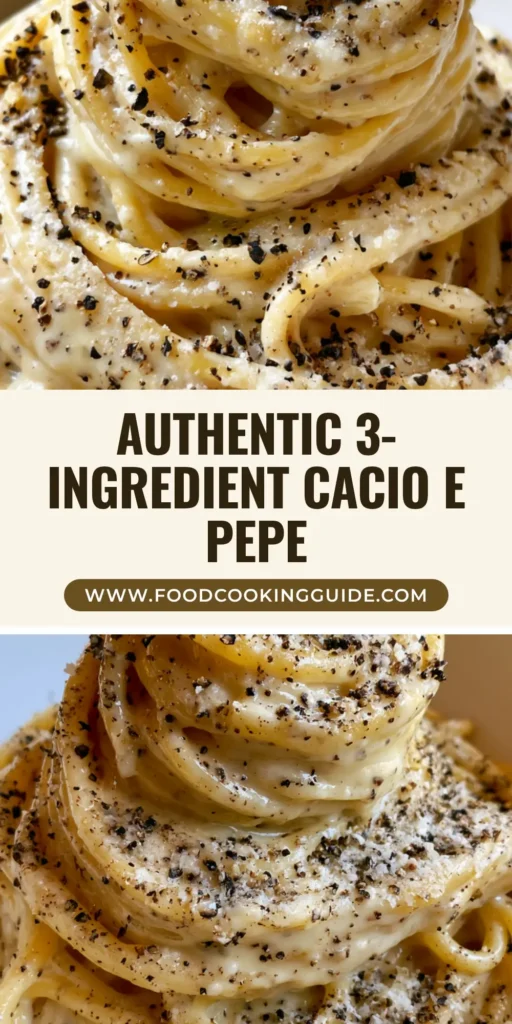
When you look at a perfectly executed plate, you see a tall, swirled mound of al dente spaghetti, glistening under a thick, glossy, pale-cream colored sauce. Every strand is thoroughly coated in an emulsified cheese lacquer, heavily speckled with coarse, unevenly cracked black pepper grains that provide both heat and texture.
In this guide, we are stripping away the modern additions of cream or butter to master the traditional Roman technique. We will achieve that exact handheld smartphone photo aesthetic: a shallow white ceramic bowl filled with pasta so creamy and peppery, it looks like it was plucked straight from a Trastevere trattoria.
The Pillars of Culinary Perfection in Every Bite
- The Emulsion: A smooth, glossy, pale-cream sauce achieved entirely through the marriage of starchy pasta water and finely grated cheese.
- The Texture: Perfectly al dente spaghetti that provides a firm “toothsome” snap against the velvet-soft cheese coating.
- The Pepper Profile: Coarsely cracked, toasted peppercorns that offer a fragrant, floral heat rather than a one-dimensional spice.
- The Visual Finish: A final dusting of powdery white Pecorino Romano that sits atop the swirled mound like fresh snowfall.
The Master Grocery List for Authentic Cacio e Pepe
Dried Spaghetti (Bronze-Cut): 1 lb (454g).
Using bronze-cut pasta is non-negotiable for this dish because the rough surface releases the vital starch needed to build our “invisible” cream sauce.
Pecorino Romano Cheese: 7 oz (200g).
This salty, tangy sheep’s milk cheese provides the backbone of the flavor; it must be aged and grated into a fine, powdery snow-like consistency to melt instantly.
Whole Black Peppercorns: 2 tbsp (12g).
Whole peppercorns are essential because pre-ground pepper lacks the volatile oils and “coarse grains” required for the signature speckled look of the blueprint.
Sea Salt: 1 tbsp (15g).
While the cheese is salty, we need a measured amount of salt in the boiling water to season the pasta from the inside out.
Reserved Pasta Water: 2 cups (480ml).
This is the “liquid gold” that acts as the primary emulsifier, bridging the gap between the dry cheese and the slick pasta.
Essential Equipment for a Roman Masterpiece
A Large Shallow Skillet: A wide surface area is crucial for tossing the pasta and evaporating the water into a thick, glossy emulsion.
A Microplane or Fine Grater: To achieve that specific “powdery white Pecorino” look, you must grate the cheese as finely as possible so it integrates without clumping.
A Heavy Mortar and Pestle: This allows you to create “unevenly cracked grains” of pepper, which provide better visual contrast and bursts of flavor than a standard mill.
Stainless Steel Tongs: Essential for swirling the spaghetti into that tall, professional mound seen in the visual recipe blueprint.
Step-by-Step Culinary Breakdown to Mastery
Preparing the Peppery Foundation
Place your whole peppercorns in a dry skillet over medium heat. Toast them for 2-3 minutes until you smell a deep, woody aroma and see the slightest wisps of smoke.
Transfer the warm peppercorns to a mortar and pestle. Crush them until you have a mix of fine powder and coarse, jagged grains; this variety is what creates the “heavily speckled” look in our blueprint.
The Starch-Focused Pasta Boil
Bring 4 quarts (3.8L) of water to a boil in a large pot. Use less water than usual; a lower water-to-pasta ratio creates a more concentrated starch solution, which is our secret weapon for a creamy sauce.
Add the spaghetti and cook for exactly 2 minutes less than the package directions. We need the pasta to be “molto al dente” because it will finish cooking in the skillet with the cheese sauce.
Creating the “Pecorino Paste”
While the pasta boils, place 1.5 cups (150g) of the finely grated Pecorino Romano in a small bowl. Slowly whisk in 1/2 cup (120ml) of the hot, starchy pasta water.
Whisk vigorously until a thick, smooth paste forms. This pre-emulsification technique prevents the cheese from clumping or “stringing” when it hits the hot skillet later.
The Final Emulsification and Toss
Drain the pasta, making sure to reserve at least 1.5 cups (360ml) of the cooking water. Transfer the spaghetti directly into the skillet with the toasted pepper grains.
Add 1/2 cup (120ml) of pasta water to the skillet and toss over medium-low heat. Once the water begins to bubble and look creamy, remove the pan from the heat entirely—this is critical to avoid curdling the cheese.
Add the Pecorino paste to the skillet. Use your tongs to vigorously swirl and toss the spaghetti. Listen for a “slapping” sound; this indicates the sauce is emulsifying into a thick, pale-cream colored coating.
Expert Tips for a Glossy, Clump-Free Sauce
- The Temperature Trap: Pecorino Romano begins to clump at 150°F (65°C). Always remove the skillet from the burner before adding your cheese paste to ensure a smooth result.
- Water is Your Friend: If the sauce looks too thick or dry, add pasta water one tablespoon at a time. The final result should look like a glossy lacquer, not a dry coating.
- Grate it Yourself: Never use pre-shredded cheese. It contains anti-caking agents like potato starch that will prevent the cheese from ever becoming a smooth sauce.
- Bronze-Cut is Best: If you are looking for an alternative to spaghetti, try bucatini or tonnarelli, but ensure they are bronze-extruded for maximum starch release.
How to Store and Revive Your Leftovers
Authentic Cacio e Pepe is best enjoyed immediately while the emulsion is at its peak. However, if you have leftovers, they can be stored in an airtight container in the refrigerator for up to 2 days.
To reheat, do not use a microwave, as the high heat will cause the cheese to separate and become oily. Instead, place the pasta in a skillet with 2 tablespoons (30ml) of water and heat over low, tossing constantly until creamy again.
We do not recommend freezing this dish, as the delicate cheese emulsion will break upon thawing, resulting in a grainy texture.
What to Serve With Your Roman Pasta
This dish is rich and peppery, so it pairs beautifully with light, acidic sides or protein-heavy mains that can cut through the creaminess. Consider serving it as a “primo” course followed by a succulent pork tenderloin for a full Italian experience.
For a lighter pairing, a crisp green salad or zesty lemon garlic butter salmon provides a refreshing contrast to the sharp Pecorino. If you’re craving more comfort, this pasta also complements a garlic parmesan chicken meatloaf perfectly.
And for dessert? Stick with the Mediterranean theme by trying a creamy pistachio mascarpone cake to round out the meal.
Frequently Asked Questions
While you can, it won’t be ‘Authentic’. Pecorino Romano is a sharp sheep’s milk cheese that provides the signature tang. Parmesan (cow’s milk) is milder and has a different melting profile, which will change the flavor and texture.
The secret is toasting whole peppercorns in a dry pan until they become aromatic before crushing them. This releases the essential oils, making the pepper far more flavorful than pre-ground varieties.
Traditional Roman Cacio e Pepe never uses butter or cream. The creaminess comes entirely from the emulsion of starchy pasta water and finely grated cheese. Adding cream is considered a shortcut that masks the true flavor of the ingredients.
Spaghetti is the classic choice. Tonnarelli (a thicker, square-cut egg pasta) is also traditional in Rome. The key is using a ‘bronze-cut’ pasta, as the rough texture is essential for the cheese sauce to cling to the strands.
Clumping happens when the Pecorino cheese gets too hot. Pecorino has a low melting point; if added to a boiling pan, the proteins tighten and separate from the fat. Always remove your pan from the heat before adding the cheese.
The Ultimate Authentic Cacio e Pepe Recipe
Authentic Cacio e Pepe: The Ultimate Guide to Rome’s Creamy Three-Ingredient Pasta
Ingredients
Equipment
Method
- Toast whole peppercorns in a dry skillet over medium heat for 2-3 minutes until fragrant. Coarsely crack in a mortar and pestle.
- Boil spaghetti in salted water until 2 minutes before al dente. Reserve 2 cups of starchy pasta water.
- Whisk 1.5 cups of grated Pecorino with 1/2 cup of hot pasta water in a bowl to create a smooth, thick paste.
- Add drained pasta and cracked pepper to a skillet with 1/2 cup pasta water. Remove from heat and stir in cheese paste, tossing vigorously with tongs until a glossy, pale-cream sauce forms.
Notes
Use high-quality bronze-cut pasta for the best sauce adhesion.
Experience the Authentic Taste of Rome
Mastering Authentic Cacio e Pepe is a rite of passage for every home cook. It teaches you the importance of temperature control and the magic of simple, high-quality ingredients. Once you see that thick, glossy sauce clinging to your spaghetti, you’ll never go back to the butter-heavy versions again.
If you enjoyed this deep dive into Roman technique, please leave a comment below and let us know how your emulsion turned out! Don’t forget to share your tall, swirled pasta mounds with us on Pinterest so we can see your culinary success.