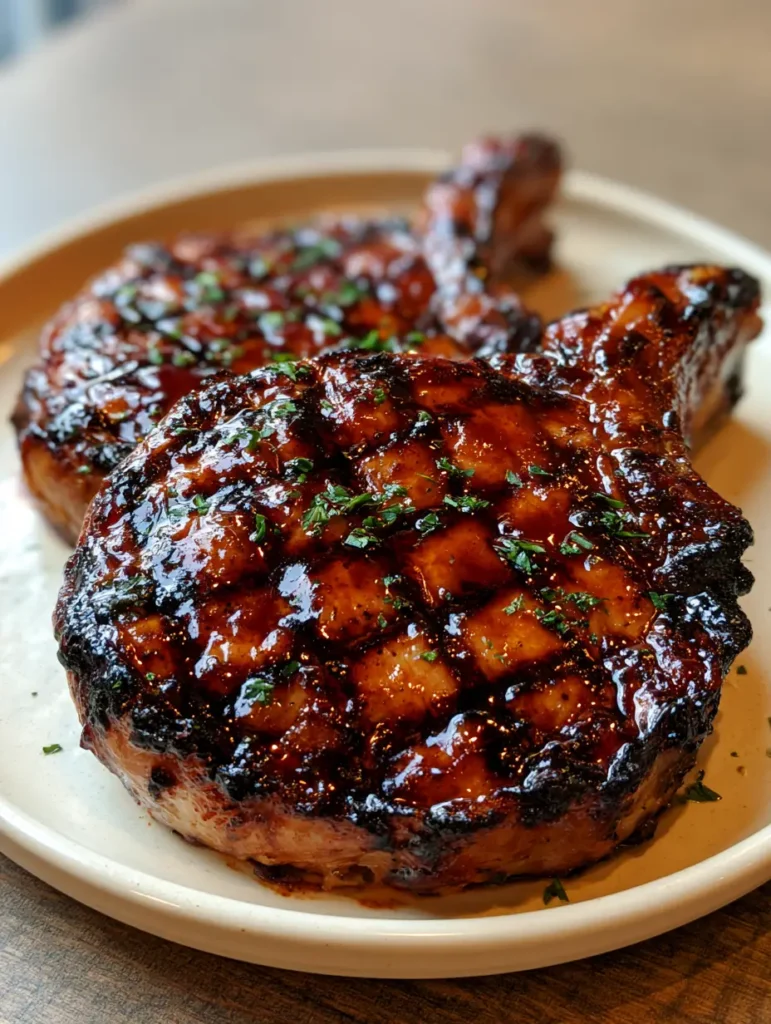
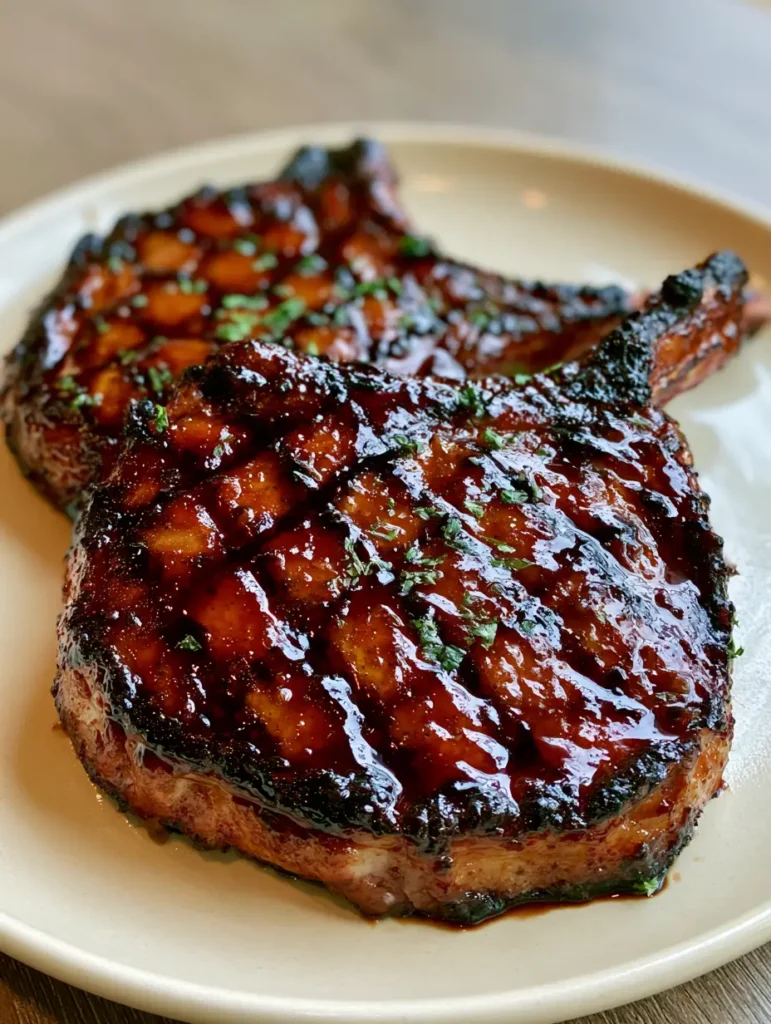
There is a specific visual magic that happens when high heat meets a rich, molasses-heavy sweetener on a thick cut of meat. These Brown Sugar Grilled Pork Chops represent the pinnacle of backyard barbecue artistry, delivering a glossy, dark brown finish that looks just as incredible in a smartphone photo as it tastes on the plate. If you have ever struggled with dry meat or a glaze that burns before it caramelizes, this forensic approach to grilling will change your results forever.
The secret to achieving that professional, cross-hatch char mark lies in the science of the Maillard reaction combined with controlled sugar caramelization. We aren’t just tossing meat on a flame; we are building layers of flavor that result in a sticky, reflective coating that perfectly balances the savory richness of the bone-in pork. Each bite offers a crunch from the charred exterior and a succulent, tender interior that rivals any high-end steakhouse.
Whether you are hosting a summer cookout or preparing a quick weeknight dinner, these chops are designed to impress. The vibrant green of the freshly chopped parsley against the deep mahogany of the glaze creates a visual contrast that signals freshness and depth. Let’s dive into the technical details of how to master the flame and the sugar.
Why This Caramelized Pork Recipe Works Every Time
- The High-Gloss Finish: By using a specific ratio of dark brown sugar and oil, we create a glaze that reflects light and clings to the meat without sliding off into the grates.
- Visual Texture: The thick, cross-hatch char marks provide a bitter counterpoint to the sweetness of the glaze, creating a complex flavor profile.
- Bone-In Succulence: Leaving the bone in acts as an insulator, ensuring the center of the chop stays juicy while the exterior reaches a deep, dark caramelization.
- Balanced Aromatics: We use foundational elements like garlic and onion powder to ensure the sweetness doesn’t overpower the natural pork flavor.
Essential Components For The Glossy Brown Sugar Glaze
To achieve the result seen in our visual blueprint, every ingredient serves a structural or chemical purpose. You cannot achieve a thick, sticky glaze without the right balance of solids and fats.
Thick Bone-In Pork Chops: You need chops at least 1.5 inches (3.8cm) thick. Thinner chops will overcook before the sugar has time to transform into that dark brown, glossy coating we are looking for.
Dark Brown Sugar: 1 cup (200g) of packed dark brown sugar is the heart of this recipe. The higher molasses content in dark brown sugar provides a deeper color and a more robust, sticky texture than light brown sugar.
Neutral Oil or Melted Butter: 2 tbsp (30ml) of oil is vital for heat conduction. This foundational ingredient ensures the pork sears rather than sticks, and it helps the sugar melt into a smooth, reflective liquid.
Kosher Salt and Coarse Black Pepper: 1 tsp (6g) salt and 1/2 tsp (3g) pepper are non-negotiable. Salt penetrates the muscle fibers, while the pepper adds a bite that cuts through the sugar’s richness.
Apple Cider Vinegar: 1 tbsp (15ml) provides the necessary acidity. This “invisible” ingredient brightens the heavy glaze, preventing it from tasting cloying.
Fresh Green Parsley: 2 tbsp (8g) of finely chopped parsley is the final visual bridge. The bright green flecks provide a pop of color against the cream ceramic plate and the dark meat.
If you enjoy this flavor profile, you might also love our brown sugar pineapple wings for your next gathering.
Must-Have Tools For Professional Grill Marks
Achieving that “smartphone photo” quality requires the right equipment. You don’t need a professional kitchen, but you do need tools that can handle high heat and precision timing.
Heavy-Duty Grill Grates: Whether you use a gas grill or charcoal, cast iron grates are preferred for their heat retention, which is necessary for those deep cross-hatch marks. Make sure they are scrubbed clean before starting.
Instant-Read Meat Thermometer: This is the only way to guarantee a safe and juicy result. We are looking for an internal temperature of 145°F (63°C).
Long-Handled Silicone Basting Brush: You need a brush that can apply a thick layer of glaze quickly. Silicone is heat-resistant and easier to clean than natural bristles when dealing with sticky sugar.
High-Quality Tongs: Avoid piercing the meat with a fork, as this allows the juices to escape. Sturdy tongs allow you to flip and rotate the chops to achieve the perfect 45-degree angle for char marks.
Mastering The Perfect Cross-Hatch Sear
Grilling is a game of heat management. To get that deep, dark brown caramelized sugar glaze, we use a two-stage cooking process: searing and glazing.
Step 1: Tempering and Seasoning the Pork
Remove your thick bone-in pork chops from the refrigerator 20-30 minutes before grilling. This allows the meat to reach room temperature, ensuring even cooking through to the bone.
Pat the meat completely dry with paper towels. Any moisture on the surface will create steam, which prevents the Maillard reaction. Once dry, season liberally with salt and pepper, pressing the spices into the meat fibers.
Step 2: Preparing the Glossy Glaze
In a small bowl, whisk together the dark brown sugar, oil, apple cider vinegar, and a pinch of garlic powder. The consistency should be like thick sand. As it heats on the grill, the sugar will melt into a glossy, dark liquid.
If you prefer a more subtle flavor profile, you might want to compare this to our juicy baked pork chops which use a different moisture-retention technique.
Step 3: Searing for Visual Impact
Preheat your grill to high heat (about 450°F / 232°C). Lightly oil the grates. Place the pork chops on the grill at a 45-degree angle to the grate lines. Press down slightly to ensure contact.
Sear for 3-4 minutes without moving them. To get the cross-hatch pattern, rotate the chops 90 degrees and sear for another 2-3 minutes. You should hear a vigorous sizzle and see smoke—this is the smell of a perfect sear developing.
Step 4: The Glazing Phase
Flip the chops over and immediately reduce the grill heat to medium, or move the chops to the cooler side of the grill (indirect heat). Use your basting brush to apply a thick layer of the brown sugar mixture to the seared side.
Close the grill lid for 4-5 minutes. The trapped heat will melt the sugar into a sticky, reflective coating. Apply a second layer of glaze in the final 2 minutes of cooking. Look for the glaze to bubble and darken into a mahogany hue.
Step 5: The Parsley Garnish and Resting
Check the internal temperature; once it hits 140°F (60°C), remove them from the grill. The temperature will rise to the target 145°F (63°C) as they rest. Place them on a cream-colored ceramic plate to let the juices redistribute.
While the meat is resting and the glaze is still tacky, sprinkle the finely chopped fresh green parsley over the top. The residual heat will slightly soften the parsley, helping it adhere to the glossy surface.
Expert Tips For Caramelized Grilling Success
- Watch the Sugar: Sugar burns at 350°F (177°C). Always apply the glaze during the indirect heating phase or at the very end of searing to avoid a bitter, blackened crust.
- Clean Your Grates: Carbon buildup from previous cookouts will prevent clean char marks. Use a wire brush on a hot grill before placing your meat.
- The Resting Rule: Never cut into a pork chop immediately. A 5-10 minute rest ensures the glossy glaze sets and the meat remains tender.
- Oil the Meat, Not Just the Grill: For the most reflective glaze, lightly brush the pork with oil before the sugar rub to create a smooth surface for the caramel to form.
Flavor Pairings and Serving Suggestions
These Brown Sugar Grilled Pork Chops are incredibly versatile. To balance the sweetness of the glaze, serve them with something slightly acidic or salty. A side of mexican potatoes provides a spicy, earthy contrast that complements the caramelized exterior.
If you are looking for a lighter pairing, a crisp green salad or even a side of grilled shrimp bowl elements can turn this into a surf-and-turf feast. The goal is to provide a neutral background, like the wooden tabletop in our visual prompt, so the glossy pork remains the star of the show.
For those who love adventurous pork recipes, our marry me pork tenderloin offers a creamier alternative to this charred, sugary classic.
Storing and Reheating Your Grilled Pork
Leftover pork chops can be stored in an airtight container in the refrigerator for up to 3 days. To maintain the glossy texture of the glaze, avoid reheating in the microwave, which can make the meat rubbery.
Instead, reheat the chops in a 325°F (165°C) oven covered with foil for about 10 minutes. In the last 2 minutes, remove the foil to allow the sugar glaze to become tacky again. You can also slice the cold pork and serve it over a salad for a quick lunch.
Frequently Asked Questions
Yes, but the results will vary visually. Dark brown sugar contains more molasses, which is responsible for the deep mahogany color and the sticky, reflective texture seen in the photos. Light brown sugar will result in a paler, less robust glaze.
The key is to sear the meat first without the glaze, then move the chops to indirect heat (a cooler part of the grill) before applying the sugar mixture. This allows the sugar to melt and caramelize without reaching the smoking point of 350°F.
Aim for chops that are 1.5 inches (3.8cm) thick. Thinner chops cook too quickly, meaning you won’t have enough time to develop the deep cross-hatch char marks and the thick caramelized coating without overcooking the center.
Bone-in pork chops are highly recommended. The bone acts as a thermal insulator, preventing the meat from drying out while you wait for the exterior glaze to reach that perfect glossy, dark brown consistency.
According to USDA guidelines, pork is safe to eat when it reaches an internal temperature of 145°F (63°C) followed by a three-minute rest. We recommend removing it from the grill at 140°F as carry-over cooking will do the rest.
The Ultimate Brown Sugar Grilled Pork Chops Recipe
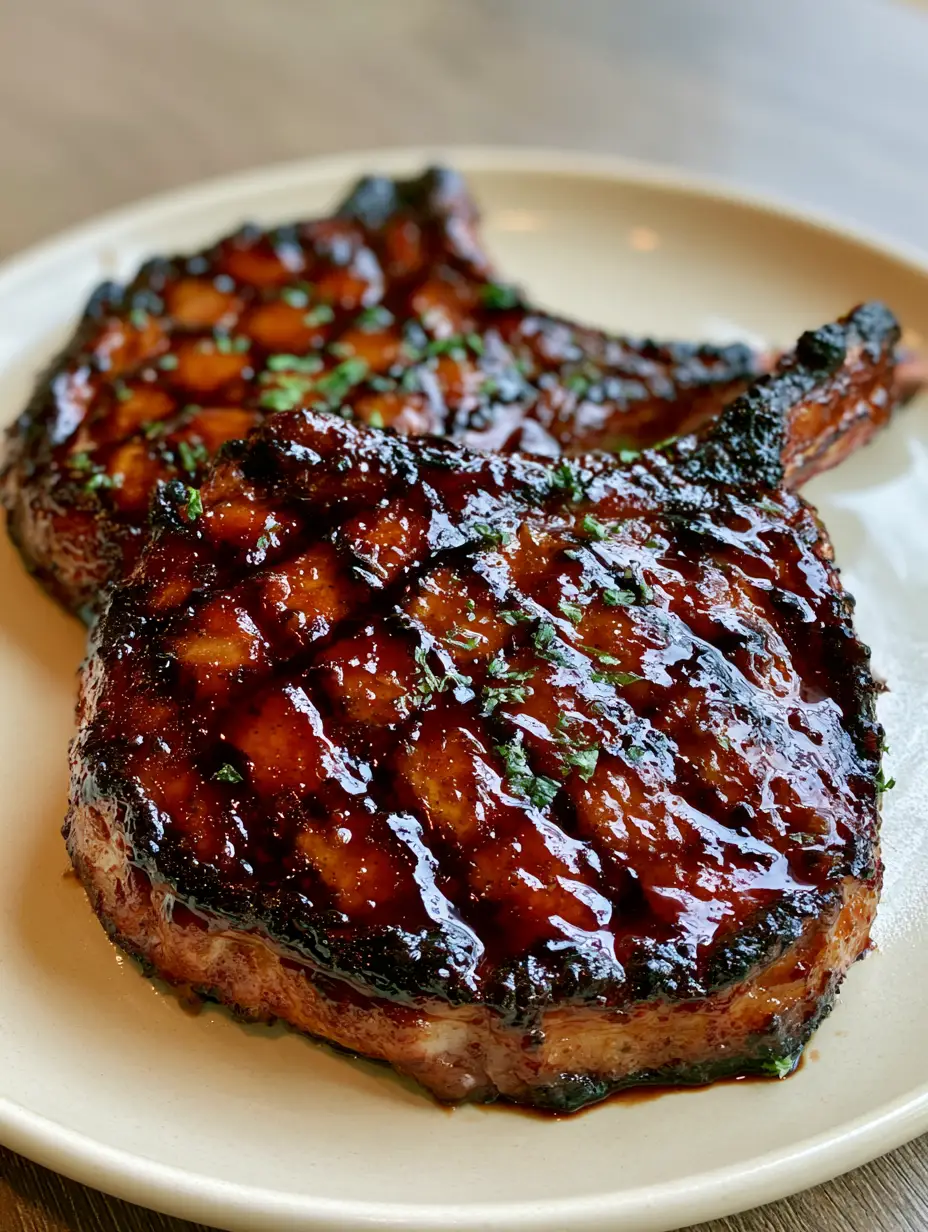
Brown Sugar Grilled Pork Chops With A Deep Caramelized Glaze
Ingredients
Equipment
Method
- Remove pork chops from the fridge 25 minutes before grilling. Pat dry with paper towels.
- In a small bowl, whisk brown sugar, oil, and vinegar until a thick paste forms.
- Place chops on a 450°F grill at a 45-degree angle. Sear for 4 minutes, rotate 90 degrees, and sear for 3 more minutes for cross-hatch marks.
- Flip chops and move to indirect heat. Brush liberally with the brown sugar glaze. Close lid and cook for 5-7 minutes until internal temp reaches 140°F.
- Remove from grill at 140°F. Let rest on a plate for 5 minutes. Sprinkle with fresh parsley before serving.
Notes
Ensure the grill is fully preheated before searing to get clear char marks.
Closing & Call to Action
Mastering the art of the Brown Sugar Grilled Pork Chops is a rite of passage for any home cook who loves the grill. By focusing on the visual cues of the char marks and the reflective quality of the glaze, you can create a meal that tastes even better than it looks. The combination of thick, bone-in meat and a sticky, caramelized coating is a guaranteed crowd-pleaser.
Did you achieve those perfect cross-hatch marks? We want to see your results! Leave a comment below and tell us how your glaze turned out. If you loved this recipe, please share it with your friends and follow us on Pinterest for more culinary inspiration and professional grilling techniques.