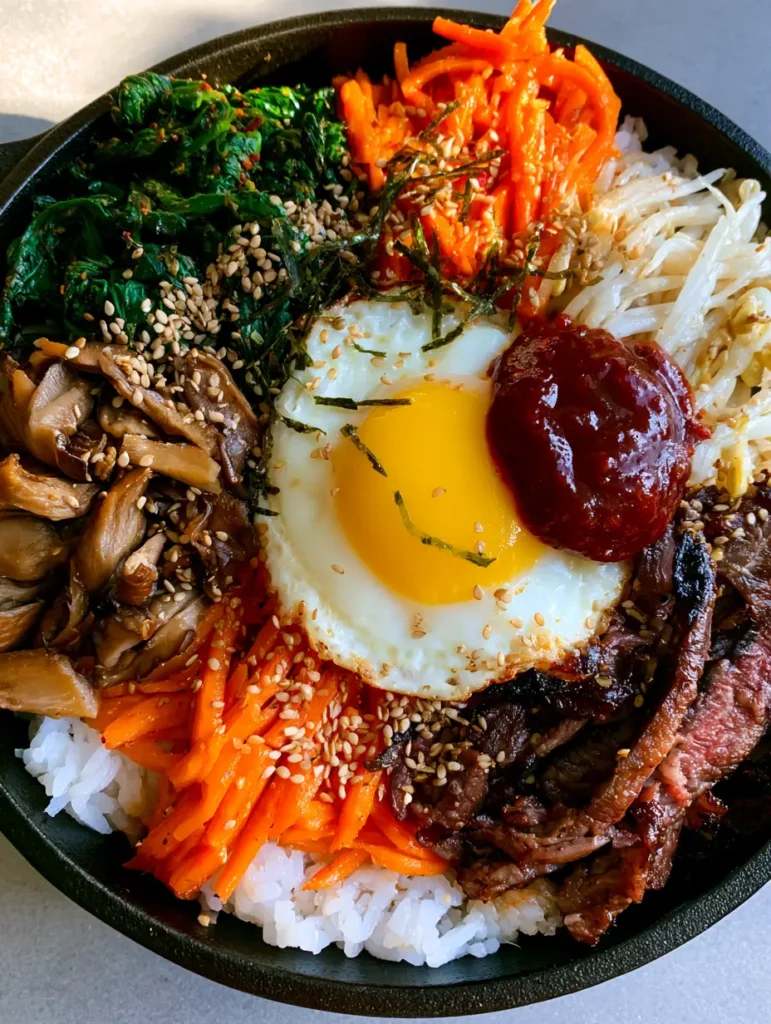
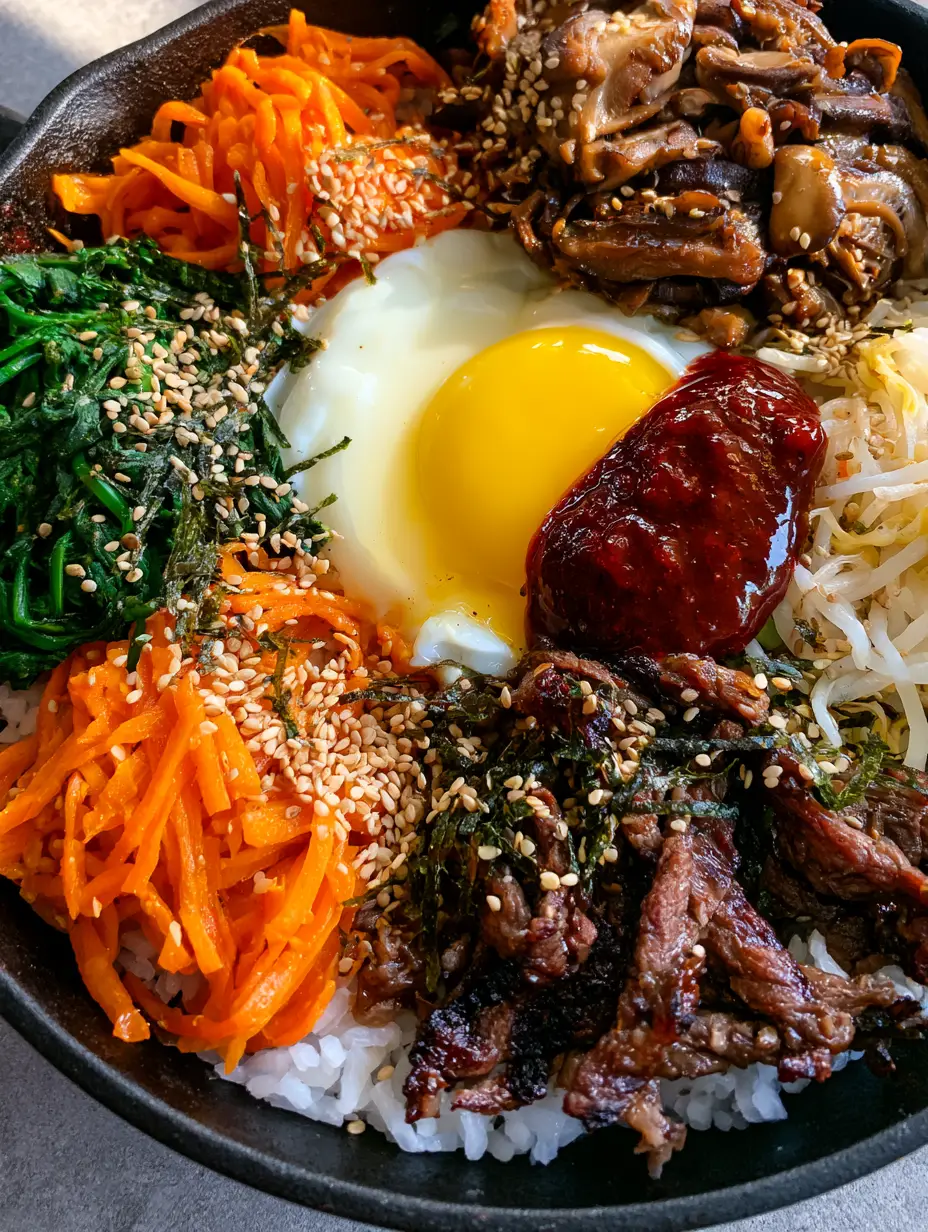
The Bibimbap Recipe is more than just a meal; it is a visual masterpiece of Korean culinary philosophy, balancing colors, textures, and nutritional harmony. When you look at a perfectly composed bowl, you see the “obangsaek” or five traditional Korean colors: green, red, yellow, white, and black, representing different elements of life.
Our version captures the essence of a high-end restaurant experience, served in a wide, shallow black cast iron pan that mimics the heat-retaining properties of a traditional dolsot. From the charred edges of the marinated bulgogi to the glossy, deep red dollop of gochujang, every element is designed to be as beautiful as it is delicious.
Whether you are a seasoned fan of Korean cuisine or a newcomer looking for a vibrant, healthy dinner, this Bibimbap Recipe will guide you through the forensic details of searing, blanching, and seasoning to achieve that iconic, handheld smartphone photo-worthy finish.
The Anatomy of an Authentic Bibimbap Bowl
- Charred Bulgogi Beef: Thinly sliced ribeye marinated in a sweet and savory sauce, seared until the edges develop a dark, caramelized crust.
- Vibrant Vegetable Namul: A rainbow of julienned bright orange carrots, wilted dark green spinach, and crisp white bean sprouts, each seasoned individually to maintain their unique flavor profiles.
- Earthy Shiitake Mushrooms: Umami-rich brown slices sautéed until tender and fragrant.
- The Perfect Topper: A fried egg with a perfectly round, runny yellow yolk that acts as a secondary sauce once broken and mixed into the fluffy white rice.
- The Flavor Anchor: A thick, glossy dollop of deep red gochujang paste, providing a spicy, fermented kick that ties the entire dish together.
Essential Ingredients for the Ultimate Bibimbap Experience
To achieve the visual and textural success of this Bibimbap Recipe, you must select ingredients that offer high contrast and authentic flavor. Each component serves a specific structural purpose in the bowl.
Short-Grain White Rice: Use 2 cups (400g) of high-quality Korean or sushi rice. Its starchy, slightly sticky nature provides the perfect “fluffy” base that holds up under the weight of the toppings.
Bulgogi Beef: 1 lb (450g) of ribeye or top sirloin, sliced paper-thin. The fat marbling is crucial for achieving those charred, crispy edges described in our visual blueprint.
Fresh Shiitake Mushrooms: 6 oz (170g) of fresh shiitakes. These provide an earthy, meaty texture that contrasts beautifully with the crunch of the vegetables.
Soy Bean Sprouts: 8 oz (225g) of fresh sprouts. When blanched correctly, they offer a crisp, clean snap that lightens the heavier flavors of the beef.
Gochujang (Korean Chili Paste): 4 tbsp (60ml) of thick red paste. This is the soul of the dish, providing the heat and depth required for an authentic finish.
Invisible Foundations: You will also need 2 tbsp (30ml) of toasted sesame oil for seasoning, 1 tbsp (15g) of neutral oil for searing, and 2 cloves of minced garlic. These are the flavor bridges that unite the various toppings.
The Culinary Toolkit: Why a Cast Iron Pan Matters
While you can serve this in a ceramic bowl, using a wide, shallow black cast iron pan is the secret to a professional result. The heavy metal retains heat, allowing the base layer of rice to develop a slight, golden-brown crust if left on the heat for a few extra minutes.
You will also need a sharp Mandoline or Chef’s knife to achieve the perfect julienne on the carrots. If you enjoy the precision of classic pasta techniques, you will appreciate the meticulous vegetable prep required here.
Step-by-Step Preparation: Crafting the Perfect Korean Bowl
1. Preparing the Fluffy Rice Base
Rinse your 2 cups (400g) of short-grain rice under cold water until the water runs clear. This removes excess surface starch, ensuring the grains remain distinct and “fluffy” rather than mushy.
Cook the rice in a rice cooker or heavy-bottomed pot using a 1:1.1 ratio of water. Once cooked, let it steam undisturbed for 10 minutes before fluffing with a spatula.
2. Marinating and Charring the Bulgogi
Combine the thinly sliced beef with 2 tbsp (30ml) soy sauce, 1 tbsp (15g) brown sugar, and 1 tsp (5ml) sesame oil. Let it sit for at least 20 minutes.
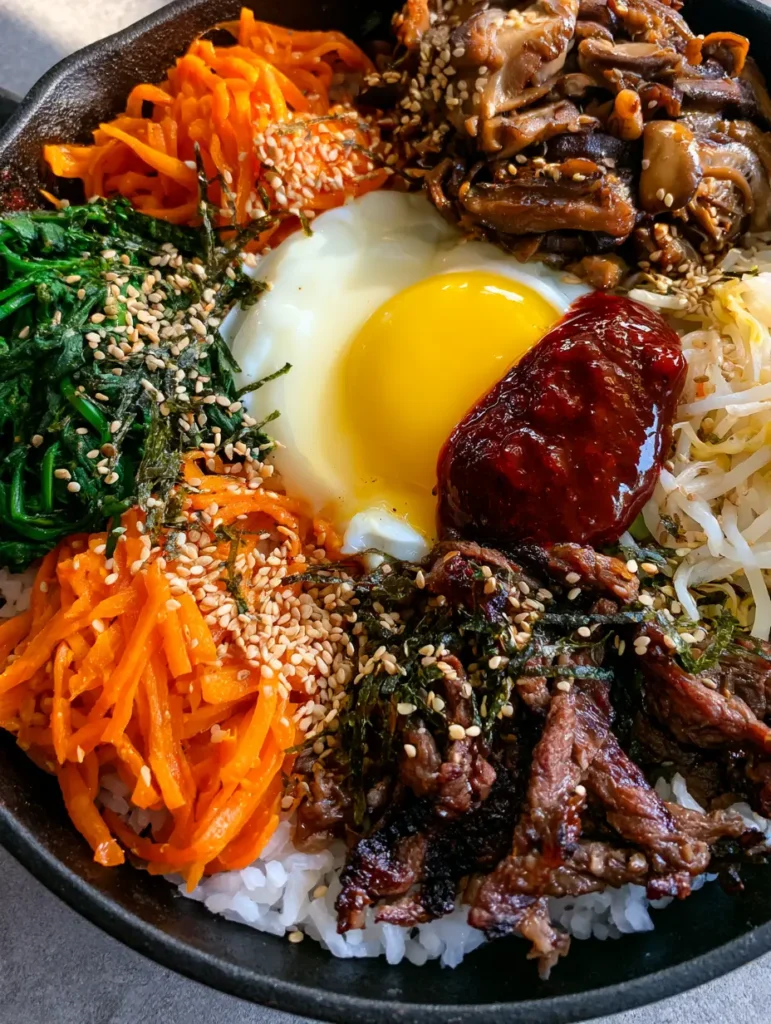
Heat your cast iron pan over high heat with 1 tsp (5ml) of oil. Sear the beef in a single layer, allowing it to sit undisturbed for 60 seconds to develop that signature char before tossing. Remove and set aside.
3. Mastering the Vegetable Namul
Blanch the spinach in boiling water for 30 seconds, then immediately shock in ice water. Squeeze out every drop of moisture and toss with a pinch of salt and a drop of sesame oil.
Sauté the julienned carrots in the same pan with a tiny bit of oil for 2 minutes until they are vibrant orange but still retain a slight “snap.” Repeat this process with the shiitake mushrooms until they are earthy brown and tender.
4. Frying the Centerpiece Egg
Wipe the pan clean and add a touch of oil. Crack the egg carefully, ensuring the yolk stays centered. Cook over medium-low heat until the whites are opaque and set, but the yellow yolk is still liquid and runny.
Expert Tips for Visual and Flavor Success
- The Squeeze: When preparing the spinach and bean sprouts, ensure you squeeze out all excess water. Residual moisture will make the rice soggy and dull the flavors of the gochujang.
- Organized Toppings: When assembling, place each ingredient in its own distinct section around the egg. This creates the “vibrant, organized” look required for an authentic presentation.
- Temperature Control: If you want the bottom of the rice to be crispy (Nurungji), place the cast iron pan over medium heat for 3-5 minutes after assembly until you hear a faint crackling sound.
- The Seaweed Garnish: Always add the dried seaweed slivers and toasted sesame seeds last. This ensures they stay crisp and provide a textural pop against the soft rice.
Flavor Pairings and Serving Suggestions
Bibimbap is a complete meal on its own, but it pairs beautifully with light, vinegar-based sides. If you are looking for more Asian-inspired dinner ideas, you might enjoy our Asian Ground Beef Spaghetti for a fusion twist.
If you prefer a lighter lunch, this bowl is a great alternative to homemade egg fried rice. For those who love a spicy kick, serving this alongside hot honey chicken bowls can create a fantastic spread for guests.
Frequently Asked Questions
Absolutely! Simply omit the bulgogi beef and add extra shiitake mushrooms or fried tofu. Ensure you use a vegetarian-friendly gochujang paste for the sauce.
Gochujang has a moderate heat level, but it is also quite sweet and salty due to the fermentation process. If you are sensitive to spice, start with 1 tablespoon and add more to taste.
The word ‘Bibim’ means mixing and ‘bap’ means rice. To eat it authentically, you must use your spoon to break the egg yolk and thoroughly mix all the toppings, rice, and gochujang together until every grain of rice is coated in the spicy, savory sauce.
Bibimbap is typically served in a standard bowl at room temperature or warm. Dolsot Bibimbap is served in a sizzling hot stone bowl (or cast iron pan) which creates a crispy layer of rice at the bottom.
Fluffy rice comes from washing away excess starch before cooking. If your rice is mushy, you likely used too much water or didn’t rinse it until the water ran clear.
The Bibimbap Recipe Card
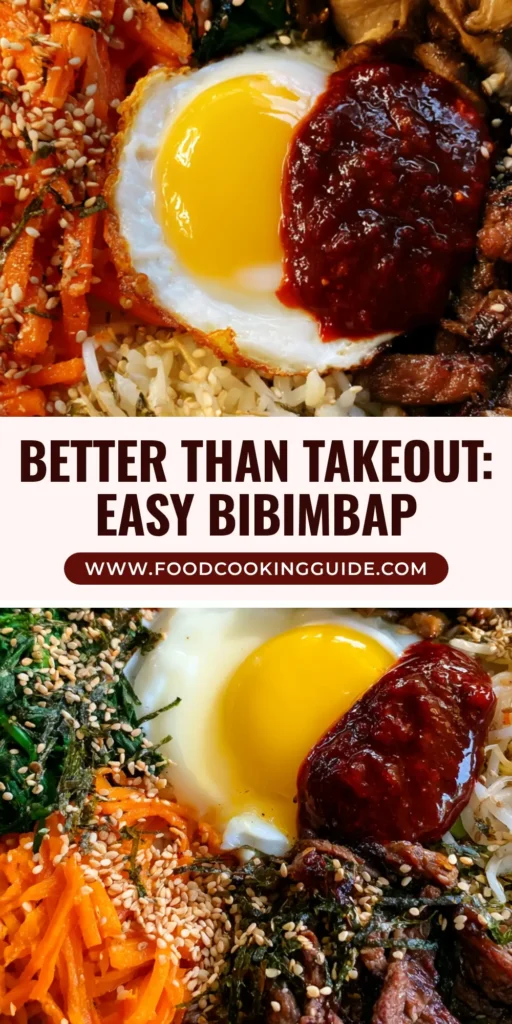
Bibimbap Recipe: The Ultimate Guide to Authentic Korean Rice Bowls
Ingredients
Equipment
Method
- Cook the rinsed short-grain rice in a rice cooker or pot until fluffy. Let it rest for 10 minutes before assembly.
- Sauté julienned carrots and shiitake mushroom slices separately in a cast iron pan with a touch of oil and salt until tender and vibrant.
- High-heat sear the marinated bulgogi beef strips until deeply charred and caramelized on the edges.
- Fry the egg in a clean pan until the whites are opaque but the yolk remains perfectly round and runny.
- Layer rice in the bottom of a black cast iron pan. Arrange toppings in neat sections, place the egg in the center, and add a dollop of gochujang. Garnish with sesame seeds and seaweed slivers.
Notes
Always mix the bowl thoroughly with the gochujang and egg yolk before eating for the best flavor.
Storage and Reheating Guidelines
Bibimbap is best enjoyed fresh, but you can store the components separately in the refrigerator for up to 3 days. To reheat, briefly sauté the vegetables and beef in a pan before placing them over freshly steamed rice.
Avoid freezing the assembled bowl, as the textures of the blanched vegetables will deteriorate. However, the marinated bulgogi can be frozen raw for up to 3 months.
Closing & Call to Action
This Bibimbap Recipe brings the vibrant flavors of Seoul directly into your kitchen. The combination of charred beef, runny yolk, and spicy gochujang creates a sensory experience that is unmatched in comfort food.
If you made this recipe, please leave a comment below and let us know how your char turned out! Don’t forget to follow us on Pinterest and share your beautiful bowl photos with our community.