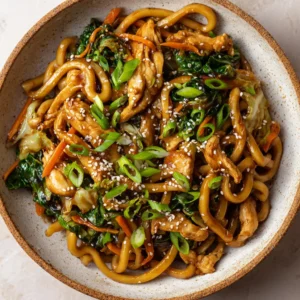
There is nothing quite as deeply satisfying as a steaming ceramic bowl filled with thick, glossy udon noodles. When those noodles are tossed in a rich, dark brown sticky teriyaki sauce, the resulting dish is truly unforgettable. This Chicken Teriyaki Noodles recipe delivers restaurant-quality flavors and textures right in your own kitchen. It perfectly balances savory, sweet, and umami profiles in every single bite.
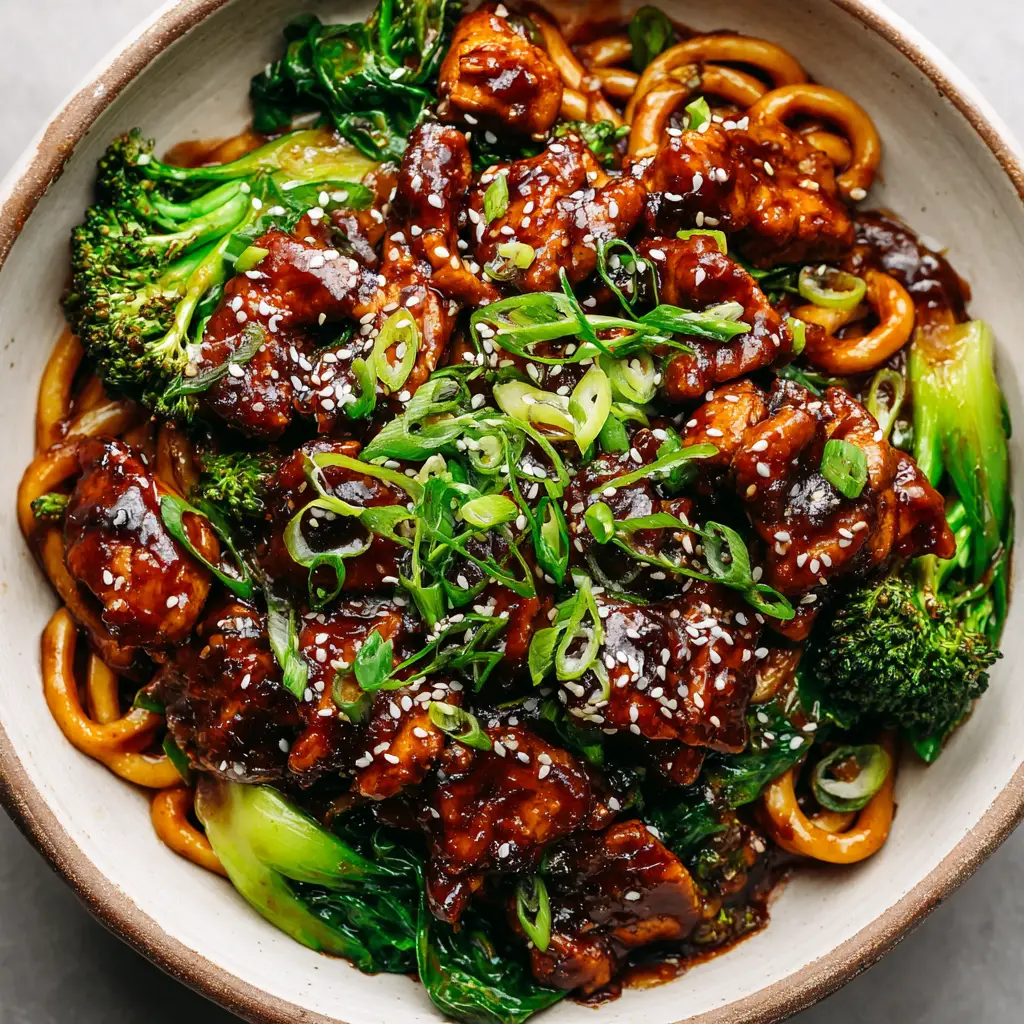
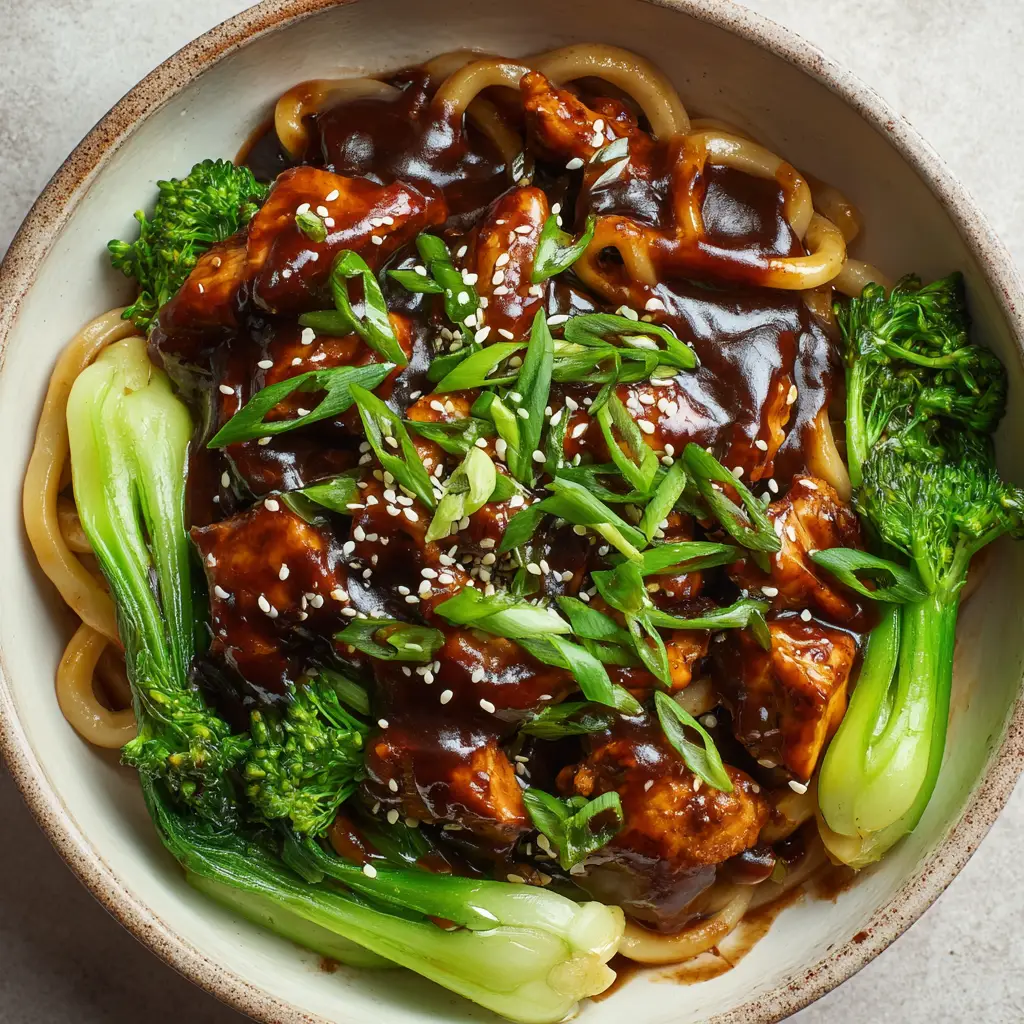
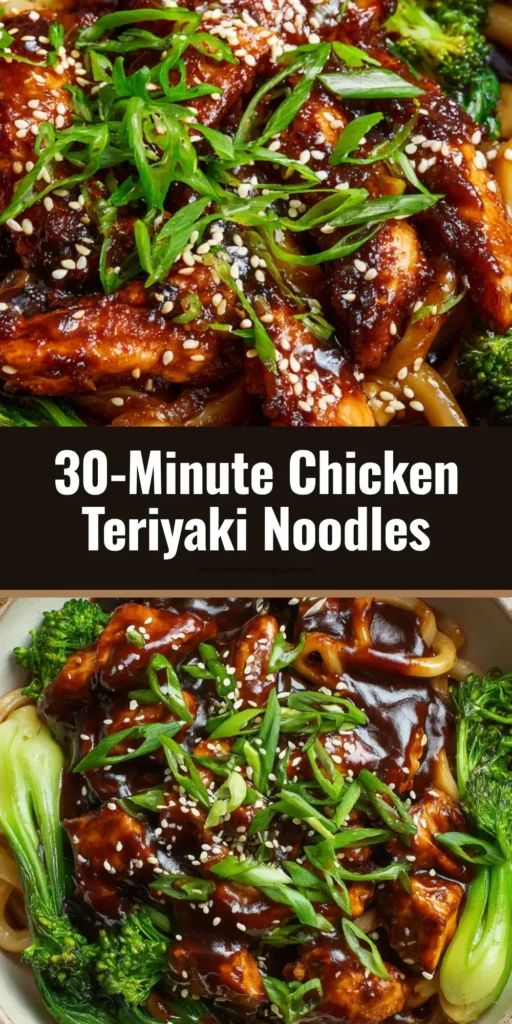
The visual appeal of this dish is undeniable, from the glossy sauce to the bright, fresh vegetables. Resting on top of the noodles are bite-sized pieces of seared, caramelized chicken breast heavily coated in the mouthwatering sauce. Bright green steamed broccoli florets and wilted bok choy are mixed throughout the base to provide the perfect tender-crisp contrast. Finished with a generous sprinkle of toasted white sesame seeds and finely chopped fresh green onions, it looks as incredible as it tastes.
Whether you are cooking for a busy weeknight family dinner or meal-prepping for the days ahead, this recipe works flawlessly. It relies on standard culinary science to build layers of flavor quickly and efficiently. Grab your favorite chopsticks and get ready to experience your new favorite homemade takeout.
Why You’ll Love This Recipe
- Perfect Textural Contrast: The chewiness of the thick udon noodles pairs brilliantly with the tender-crisp steamed broccoli and heavily seared chicken breast.
- Glossy, Sticky Coating: Thanks to a precise cornstarch slurry, the dark brown teriyaki sauce heavily coats every single ingredient rather than pooling at the bottom of the bowl.
- Vibrant and Fresh: Wilted bok choy and bright green broccoli florets ensure this dish remains fresh, visually stunning, and balanced.
- Sensory Perfection: The aroma of grated ginger and minced garlic hitting the hot oil will instantly make your mouth water.
- Incredibly Fast: Using pre-cooked udon noodles means this entire meal comes together in under 30 minutes.
Ingredients & Substitutions
To achieve the exact visual and textural results required for this dish, you will need the following components. Every ingredient serves a precise culinary purpose to build that signature sticky, caramelized profile.
The Foundation
Thick Udon Noodles: You will need 14 oz (400g) of pre-cooked thick udon noodles. These provide a robust, chewy base that won’t get lost or disintegrate in the heavy, rich sauce. If you cannot find fresh or vacuum-sealed udon, frozen udon blocks work exceptionally well.
Chicken Breast: Use 1 lb (450g) of boneless, skinless chicken breast cut into uniform, bite-sized pieces. Cutting them uniformly ensures they cook evenly and maximizes the surface area for a deep, caramelized sear. If preferred, boneless skinless chicken thighs can be substituted for a slightly richer flavor.
Cooking Oil: You need 2 tbsp (30ml) of a neutral cooking oil like canola, vegetable, or avocado oil. This invisible but foundational ingredient is required to safely sear the chicken at a high temperature without smoking or burning. Olive oil should be avoided as its smoke point is too low for this technique.
The Sticky Teriyaki Sauce
Soy Sauce: The savory backbone requires 1/2 cup (120ml) of low-sodium soy sauce. Using low-sodium allows you to control the final saltiness of the dish as the sauce reduces and concentrates.
Dark Brown Sugar: Add 1/3 cup (65g) of packed dark brown sugar to the sauce mixture. The extra molasses in dark brown sugar is exactly what gives the teriyaki glaze its signature rich, dark brown color.
Mirin: Use 2 tbsp (30ml) of mirin, a sweet Japanese rice wine. This ingredient is scientifically responsible for creating the beautiful, mirror-like glossy finish on the caramelized chicken.
Fresh Aromatics: You will need 1 tbsp (15g) of freshly grated ginger and 3 cloves of finely minced garlic. These aromatics cut through the sweetness of the sugar to provide a necessary, sharp depth of flavor.
Cornstarch Slurry: Whisk 1 tbsp (8g) of cornstarch together with 1 tbsp (15ml) of cold water. This crucial foundational step triggers starch gelatinization, thickening the sauce so it clings to the thick noodles.
The Vegetables & Garnish
Broccoli Florets: Use 1 cup (90g) of fresh broccoli cut into small, bite-sized florets. They will be briefly steamed in the pan until they turn a vibrant, bright green hue.
Bok Choy: Roughly chop 2 cups (140g) of fresh baby bok choy. The leaves will wilt beautifully into the noodle base while the stalks maintain a pleasant crunch.
Sesame Seeds: Measure out 1 tbsp (9g) of toasted white sesame seeds. Toasting them brings out their natural nutty oils, providing a textural pop against the sticky chicken.
Green Onions: You will need 2 fresh green onions, very finely chopped. Their sharp, oniony bite cuts through the rich, heavy sauce to refresh the palate.
Equipment Needed
Having the right tools ensures you can execute the searing and sauce-reduction techniques flawlessly.
- Large Carbon Steel Wok or Skillet: Essential for maintaining the high heat needed to caramelize the chicken.
- Whisk and Small Mixing Bowl: Necessary to thoroughly dissolve the brown sugar into the soy sauce before it hits the heat.
- Kitchen Tongs: The best tool for gently tossing the thick udon noodles without breaking them.
- Chef’s Knife & Cutting Board: For safely breaking down the chicken and chopping the vegetables into uniform pieces.
Step-by-Step Instructions
Follow these precise steps to ensure your chicken caramelizes perfectly and your sauce turns glossy and thick.
1. Prepare the Teriyaki Sauce
In a small mixing bowl, combine the 1/2 cup (120ml) low-sodium soy sauce, 1/3 cup (65g) dark brown sugar, 2 tbsp (30ml) mirin, grated ginger, and minced garlic. Whisk vigorously until you feel the sugar crystals mostly dissolve at the bottom of the bowl. Set this mixture aside.
2. Prepare the Slurry and Noodles
In a separate very small bowl, mix the 1 tbsp (8g) cornstarch with the 1 tbsp (15ml) cold water until completely smooth and milky. If your udon noodles are vacuum-packed and stiff, soak them in a bowl of warm water for 2 minutes. Gently use your fingers to separate the thick strands, then drain well.
3. Sear the Chicken Breast
Place your large wok or skillet over medium-high heat and pour in the 2 tbsp (30ml) of neutral cooking oil. Once the oil begins to shimmer and lightly smoke, carefully add the bite-sized chicken breast pieces in a single flat layer. Let them sit completely undisturbed for 3 to 4 minutes.
Watch the edges of the chicken where they touch the pan; you are looking for a deep, golden-brown caramelized crust to form. Once seared, use tongs to flip the chicken pieces and cook for another 2 minutes until cooked through. Remove the chicken from the pan and set it aside on a plate.
4. Steam the Vegetables
Lower the heat to medium. In the same pan (leaving any residual chicken flavor), add the 1 cup (90g) of broccoli florets and 2 cups (140g) chopped bok choy. Pour in exactly 2 tbsp (30ml) of tap water. The water will immediately hiss and turn to steam.
Cover the pan with a lid or baking sheet for 2 minutes. Remove the lid; the broccoli should be bright green and the bok choy leaves beautifully wilted. If all the water hasn’t evaporated, let it cook uncovered for another 30 seconds.
5. Thicken and Glaze
Pour your prepared teriyaki sauce mixture over the steamed vegetables in the pan. Bring the liquid to a rapid, bubbling simmer. Give your cornstarch slurry one final stir, then pour it slowly into the bubbling sauce while continuously stirring.
Within 30 to 60 seconds, you will witness a culinary transformation. The sauce will drastically reduce, turning from a watery liquid into a rich, dark brown, highly sticky glaze that looks like liquid glass.
6. Combine and Coat
Immediately add the separated udon noodles and the caramelized chicken pieces back into the pan. Use your kitchen tongs to continuously lift, fold, and toss the ingredients. Continue tossing for 1 to 2 minutes until every single noodle and piece of chicken is heavily coated in the glossy sauce.
7. Garnish and Serve
Transfer the steaming hot mixture into large ceramic bowls. Sprinkle the top generously with the 1 tbsp (9g) toasted white sesame seeds. Finish by scattering the finely chopped green onions over the dish before serving immediately.
The Science of a Sticky Teriyaki Sauce
Understanding why this sauce works will make you a better home cook. The dark brown color is a direct result of the molasses present in the dark brown sugar reacting with the soy sauce. When heat is applied, a Maillard reaction occurs, deepening the color and complexity.
The glossy, mirror-like finish is achieved through the combination of mirin and the cornstarch slurry. Mirin contains natural sugars that create an incredible sheen when reduced. Meanwhile, the cornstarch swells and bursts at boiling temperatures, trapping water molecules and turning the thin liquid into a viscous, sticky coating that clings beautifully to thick udon noodles.
Expert Tips for Success
- Dry the Chicken: Before adding the chicken to the pan, pat it completely dry with paper towels. Moisture on the surface creates steam, which will prevent the chicken from developing that crucial caramelized sear.
- Don’t Crowd the Pan: If your pan is too small, sear the chicken in two batches. Overcrowding lowers the pan’s temperature and boils the meat instead of searing it.
- Stir the Slurry at the Last Second: Cornstarch inevitably settles to the bottom of the water over time. Always give your slurry a quick stir with a spoon right before pouring it into the boiling sauce.
- Do Not Overcook the Noodles: Udon noodles are pre-cooked and only require warming through. If you leave them in the simmering sauce for too long, they will turn mushy and break apart.
Storage & Reheating/Freezing
If you have leftovers, this dish stores incredibly well. Place the cooled noodles in an airtight container and store in the refrigerator for up to 4 days. The sauce will thicken considerably as it chills.
To reheat, place the desired portion in a microwave-safe bowl and add 1 tbsp (15ml) of water. The water will create steam in the microwave, helping to loosen the thick, sticky sauce. Microwave on high in 60-second bursts, tossing gently in between, until heated through.
Freezing this specific recipe is not recommended. While the chicken and sauce freeze well, thick udon noodles and steamed bok choy undergo cellular breakdown when frozen and thawed. They will become overly soft and lose their appealing textural chew.
What to Serve With This
While this dish is a complete meal in a single ceramic bowl, it pairs beautifully with other Asian-inspired sides and appetizers. For a fantastic surf-and-turf banquet, serve these noodles alongside our sweet and savory asian-beef-short-ribs or our light and vibrant shrimp-and-asparagus-stir-fry.
If you are looking for comforting starters, a warm bowl of ginger-miso-tofu-soup makes the perfect prelude to the rich teriyaki flavors. For an amazing vegetable spread, serve this with a side of our asian-zucchini-side-dish.
Planning an extended meal prep menu? Alternate your weeknight dinners by pairing these noodles with our incredible thai-peanut-chicken-wraps or our deeply flavorful pot-roast-recipe to keep your palate engaged all week long.
Frequently Asked Questions
Yes! You can chop the broccoli florets and bok choy up to 2 days in advance. Store them in an airtight container in the refrigerator with a slightly damp paper towel to keep them crisp until you are ready to cook.
Absolutely. Boneless, skinless chicken thighs are an excellent substitute. They contain a higher fat content, making them very forgiving and incredibly flavorful when caramelized in the hot pan.
Yes. While thick udon noodles provide the best chewy texture to hold up to the heavy sauce, you can substitute them with soba noodles, ramen, or even thick spaghetti if you are in a pinch.
The key to a thick, glossy sauce is the cornstarch slurry. If your sauce is too thin, mix an additional 1/2 tablespoon of cornstarch with 1/2 tablespoon of cold water, stir it into the boiling sauce, and let it simmer for 60 seconds.
No, standard soy sauce and udon noodles contain wheat. To make this dish gluten-free, substitute the soy sauce with tamari or coconut aminos, and use a gluten-free noodle alternative like wide rice noodles.
Ready to Master the Wok?
This Chicken Teriyaki Noodles recipe proves that you don’t need a culinary degree or hours of free time to create a visually stunning, restaurant-quality meal at home. The combination of thick udon, vibrant steamed broccoli, and heavily coated, caramelized chicken is truly unmatched.
If you loved creating this glossy, sticky masterpiece, please leave a comment and a 5-star rating below! Don’t forget to subscribe to our newsletter for more weekly culinary inspiration, and save this recipe to your Pinterest boards for your next busy weeknight.
Recipe
Chicken Teriyaki Noodles: Thick Udon in a Sticky, Glossy Sauce
Ingredients
Equipment
Method
- In a small mixing bowl, combine the low-sodium soy sauce, dark brown sugar, mirin, grated ginger, and minced garlic. Whisk vigorously until the sugar crystals mostly dissolve. Set aside.
- In a separate very small bowl, mix the cornstarch with the cold water until completely smooth. Soak the udon noodles in warm water for 2 minutes, separate gently with your fingers, and drain well.
- Heat a wok or skillet over medium-high heat with the cooking oil. Add the bite-sized chicken pieces in a single flat layer. Let sit undisturbed for 3 to 4 minutes until a golden-brown crust forms. Flip and cook for another 2 minutes. Remove and set aside.
- Lower heat to medium. Add the broccoli florets, chopped bok choy, and 2 tbsp of water to the pan. Cover and steam for 2 minutes until the broccoli is bright green and bok choy is wilted.
- Pour the prepared teriyaki sauce over the vegetables. Bring to a simmer. Give the cornstarch slurry a stir, then pour it slowly into the sauce while stirring continuously. Watch it turn thick and glossy within 60 seconds.
- Immediately add the separated udon noodles and the caramelized chicken back into the pan. Use tongs to toss continuously for 1 to 2 minutes until heavily coated.
- Transfer into ceramic bowls. Sprinkle generously with toasted white sesame seeds and finely chopped green onions. Serve immediately.
Notes
Don't Crowd the Pan: Sear the chicken in batches if your pan is too small.