There is something almost therapeutic about the rhythm of maintaining a sourdough starter, but the mounting pile of discard can often feel like a culinary burden. Enter the Sourdough Discard Focaccia, a recipe designed to transform your “waste” into a masterpiece of golden-brown crust and airy, bubble-filled crumb.
This isn’t just any bread; it is a sensory experience defined by deep dimples filled with glistening extra virgin olive oil and the earthy aroma of fresh rosemary. Whether you are a seasoned baker or a novice looking to utilize your starter, this recipe delivers a professional-grade result right from your home kitchen.
By leveraging the acidity of the discard and a high-hydration dough, we achieve a texture that is simultaneously crispy on the edges and soft in the center. Let’s dive into how you can create this stunning, amber-hued loaf using simple techniques and forensic attention to detail.
Why Your Sourdough Discard Needs This Focaccia Makeover
- Unmatched Texture: The combination of sourdough discard and a touch of commercial yeast creates a crumb with distinct airy bubbles and a satisfying chew.
- Visual Brilliance: Following this guide results in a toasted golden-brown crust that looks exactly like a high-end artisanal bake, complete with crystalline flakes of sea salt.
- Zero Waste Excellence: This recipe utilizes a significant amount of discard, ensuring your hard-earned flour and water never go to waste.
- Flavor Complexity: The long fermentation process, aided by the discard, produces a subtle tang that perfectly complements the rich, savory notes of extra virgin olive oil.
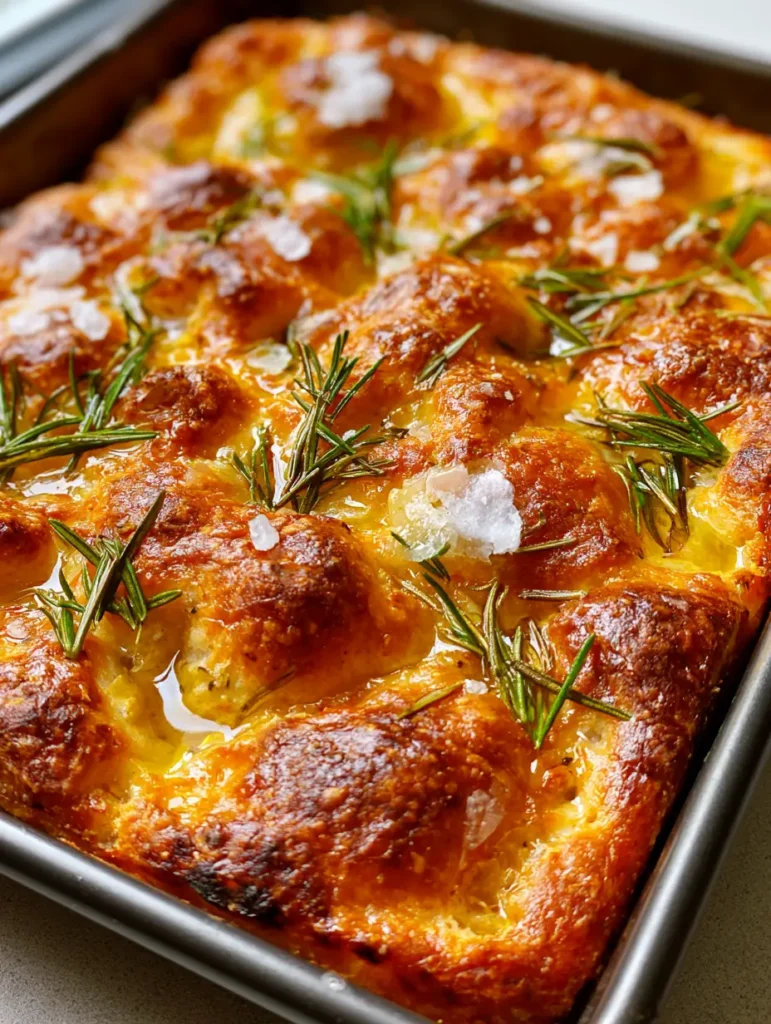
Essential Ingredients for a Crispy, Bubbly Crust
Sourdough Discard: Use 1 cup (240g) of unfed sourdough discard. This provides the foundational tang and acidity that softens the gluten for a tender interior.
Warm Water: You will need 1.5 cups (360ml) of filtered water at approximately 95°F (35°C). High hydration is the scientific secret to achieving those large, airy bubbles in the crumb.
Instant Yeast: Include 1 tsp (3g) of instant yeast to ensure a reliable rise. While the discard adds flavor, the commercial yeast provides the structural lift needed for a thick, pillowy focaccia.
All-Purpose Flour: Use 4 cups (500g) of high-quality flour. This provides the protein structure necessary to trap the gases produced during fermentation.
Fine Sea Salt: Incorporate 2 tsp (12g) into the dough. Salt is a flavor enhancer and a gluten regulator, preventing the dough from becoming overly sticky or slack.
Extra Virgin Olive Oil: You will need 1/2 cup (120ml) total. This is used for coating the pan, the dough, and creating those iconic glistening pools on the surface.
Fresh Rosemary: Use 2 tbsp (3g) of vibrant green rosemary needles. The oils from the fresh needles infuse into the bread during the bake, creating a rustic, Mediterranean aroma.
Flaky Sea Salt: A generous sprinkle of crystalline flakes for the finish. This adds a visual sparkle and a localized burst of salinity that cuts through the richness of the olive oil.
The Tools You Need for That Perfect Rectangle Bake
To achieve the visual result of a deeply dimpled, toasted amber crust, you must use a dark metal rectangular baking pan, ideally 9×13 inches (23×33 cm). Dark metal conducts heat more efficiently than glass or ceramic, which is essential for “frying” the bottom of the dough in olive oil for crispy edges.
A large mixing bowl and a sturdy spatula are required for the initial shaggy mass. For the fermentation phase, you will need plastic wrap or a damp kitchen towel to maintain humidity and prevent a skin from forming on the dough.
Building Structure: The Sourdough Discard Focaccia Process
Mixing and the Initial Rise
In a large bowl, whisk together your warm water, sourdough discard, and instant yeast until the discard is mostly dissolved. Slowly add the flour and fine sea salt, stirring with a spatula until a sticky, shaggy dough forms and no dry flour remains.
Cover the bowl and let the dough rest for 30 minutes. This allows the flour to fully hydrate, making the next steps of “stretch and folds” much easier to manage.
The Cold Fermentation Secret
Perform three sets of stretch and folds every 30 minutes. Reach under one side of the dough, pull it upward, and fold it over the center; rotate the bowl and repeat four times per set.
After the final set, cover the bowl tightly and place it in the refrigerator for at least 12 hours. This cold ferment is what develops the “airy bubbles” and complex flavor profile seen in the professional visual blueprint.
Preparing the Pan and Final Proof
Pour 2 tbsp (30ml) of extra virgin olive oil into your dark metal rectangular baking pan. Gently transfer the cold dough into the pan, turning it once to coat both sides in oil.
Stretch the dough gently toward the corners, but do not force it if it resists. Cover and let it rise in a warm, draft-free spot for 2 to 3 hours until it has doubled in size and looks jiggly.
Dimpling and Dressing for the Oven
Preheat your oven to 425°F (218°C). Drizzle the remaining olive oil over the top of the dough until you see visible pools forming in the natural undulations of the surface.
Using oiled fingertips, press straight down into the dough to create deep dimples. Scatter the fresh rosemary needles and the crystalline flaky sea salt across the surface, ensuring even distribution.
Baking to Golden Amber Perfection
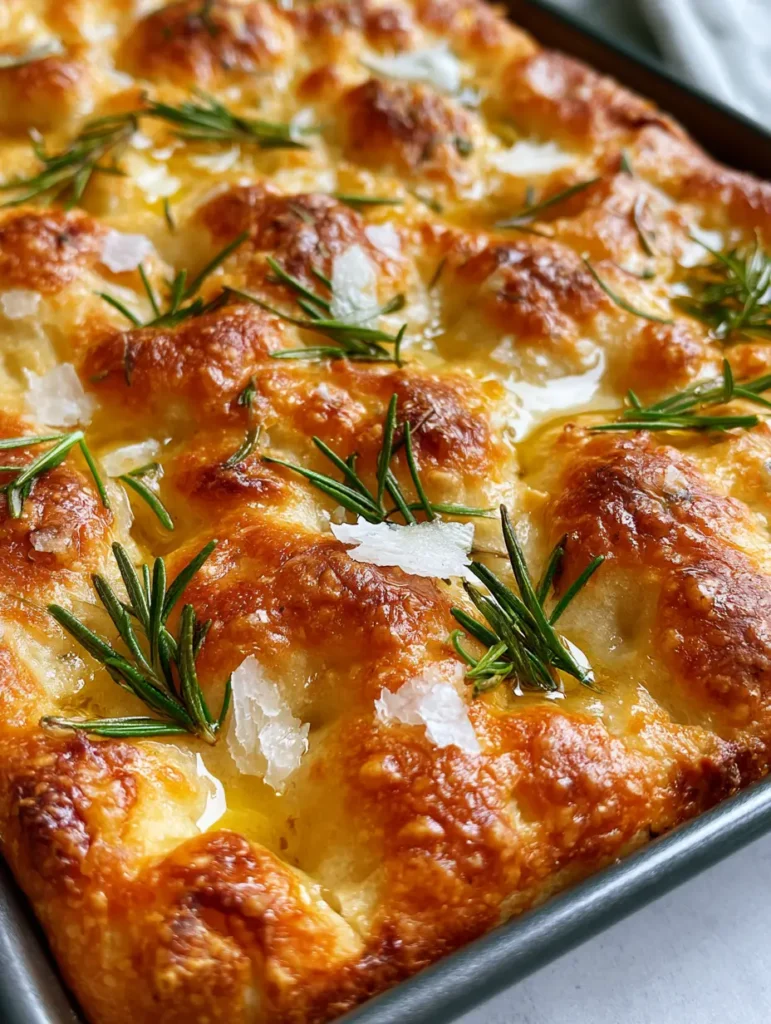
Bake for 20-25 minutes. Look for the visual cues of a toasted golden-brown crust and crispy edges that have pulled away slightly from the sides of the pan.
The rosemary should look toasted but not burnt, and the oil pools should be sizzling. Remove from the oven and allow the focaccia to cool in the pan for 5 minutes before transferring to a wire rack.
Pro Secrets for the Ultimate Deep-Dimpled Texture
- Oil is Your Friend: Do not skimp on the olive oil. The oil essentially “confits” the bottom of the bread, creating that sought-after fried texture and golden-brown color.
- Wet Fingers: When dimpling the dough, keep your fingers well-oiled or slightly wet to prevent the dough from sticking and tearing the delicate air bubbles.
- Watch the Temperature: Every oven is different. Use an internal thermometer to check for a temperature of 200°F (93°C) if you are unsure if the center is fully baked.
- Fresh vs. Dried: Always use fresh rosemary. Dried rosemary can become needle-like and unpleasant to eat, whereas fresh needles soften slightly and release aromatic oils.
How to Keep Your Sourdough Discard Focaccia Fresh
This bread is best enjoyed on the day it is baked, while the edges are at their crispiest. However, you can store leftovers in an airtight container at room temperature for up to 2 days.
To reheat, place slices in a 350°F (175°C) oven or toaster oven for 5 minutes. This revives the “glistening” quality of the olive oil and restores the crunch to the toasted amber crust.
For long-term storage, wrap individual slices tightly in plastic wrap and freeze for up to 3 months. Thaw at room temperature and toast before serving to bring back the original texture.
What to Serve with Your Freshly Baked Bread
This Sourdough Discard Focaccia is incredibly versatile. It serves as the perfect vessel for soaking up the juices from sheet pan chicken fajitas or as a side for a hearty pasta dish.
For a sophisticated lunch, slice the focaccia horizontally and build a sandwich using leftovers from a homemade chicken shawarma. The tang of the discard pairs beautifully with middle-eastern spices.
If you’re serving this as part of a breakfast spread, it provides a savory contrast to a pistachio mascarpone topped pastry. Alternatively, pair it with crispy Mexican potatoes for a carb-lover’s dream brunch.
Common Questions About Baking with Sourdough Discard
While you can use dried rosemary, fresh needles are highly recommended. Fresh rosemary infuses the oil with better flavor and doesn’t become unpleasantly hard or woody during the bake.
Yes, you can use cold sourdough discard. However, ensure your water is warm (95°F) to help bring the overall dough temperature up, which encourages the yeast to activate more efficiently.
No, this recipe is designed for ‘discard,’ which is unfed starter. The small amount of instant yeast added provides the primary leavening, while the discard provides flavor and texture.
A dark metal rectangular pan is superior to glass or ceramic. Dark metal absorbs and radiates heat better, which is essential for achieving a toasted, crispy golden-brown bottom crust.
Airy bubbles are a result of high hydration and proper fermentation. Ensure you don’t skip the cold ferment in the fridge and be very gentle when dimpling the dough so you don’t degas it.
The Ultimate Sourdough Discard Focaccia Recipe

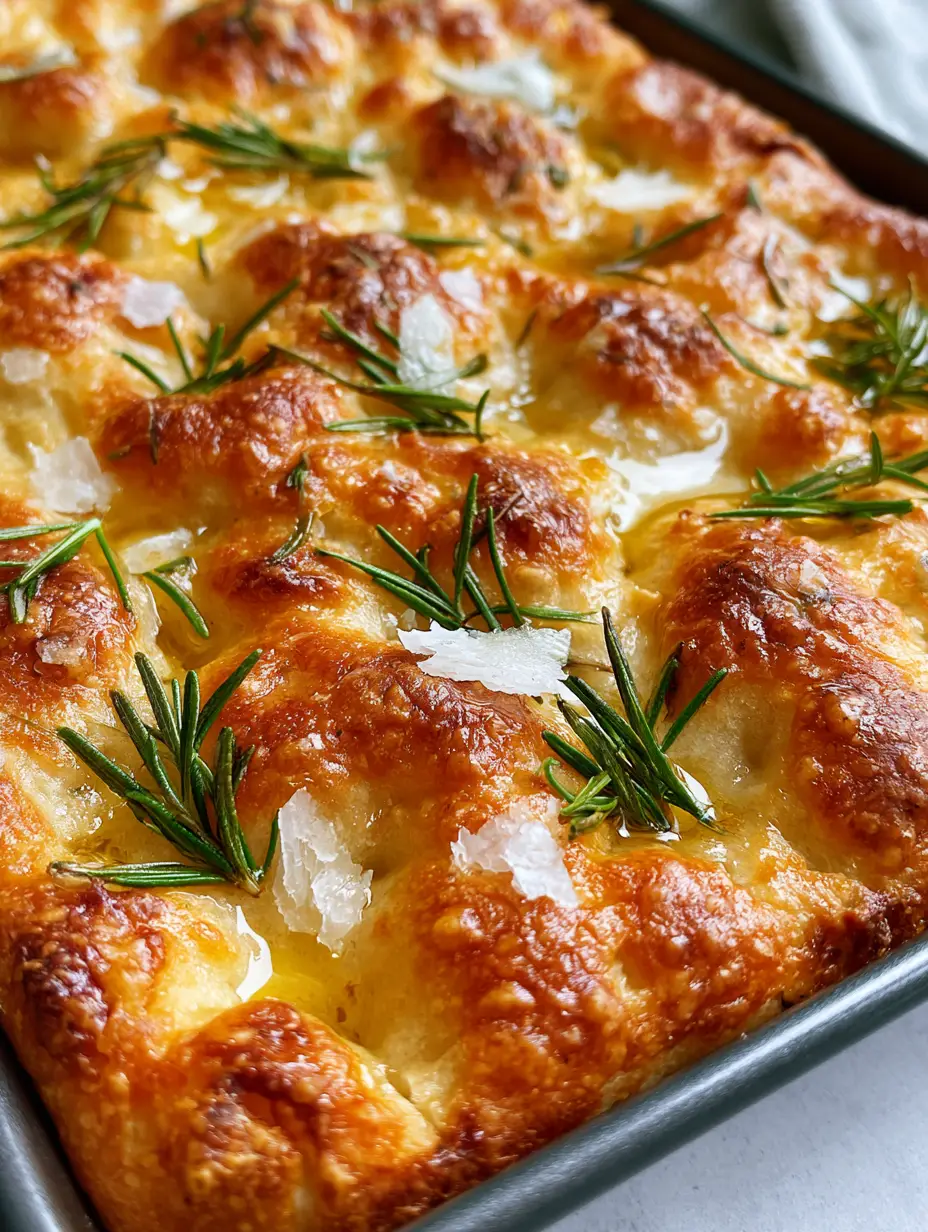
Sourdough Discard Focaccia with Fresh Rosemary and Sea Salt
Ingredients
Equipment
Method
- Whisk water, sourdough discard, and yeast. Stir in flour and fine sea salt until a shaggy mass forms. Let rest for 30 minutes.
- Perform 3 sets of stretch and folds every 30 minutes. Cover and refrigerate for 12-24 hours for a cold ferment.
- Oil a dark metal rectangular pan. Transfer dough, coating in oil. Let rise for 2-3 hours until jiggly and doubled.
- Preheat oven to 425°F. Drizzle with olive oil, dimple with fingertips, and top with fresh rosemary and flaky salt.
- Bake for 20-25 minutes until the crust is a toasted golden-brown and edges are crispy amber.
Notes
Ensure the rosemary is fresh to avoid a woody texture.
Mastering the Art of Discard Baking
Transforming your starter into a Sourdough Discard Focaccia is more than just a way to save flour—it’s a way to elevate your home baking to an artisanal level. The combination of deep dimples, aromatic rosemary, and that stunning amber crust makes this a centerpiece worth sharing.
If you enjoyed this deep dive into bread science, please leave a comment below or share your bakes with us. For more kitchen inspiration and printable guides, follow us on Pinterest and join our community of enthusiastic home cooks.